
Design
17–32 von 36 Ergebnissen werden angezeigtNach Aktualität sortiert
-
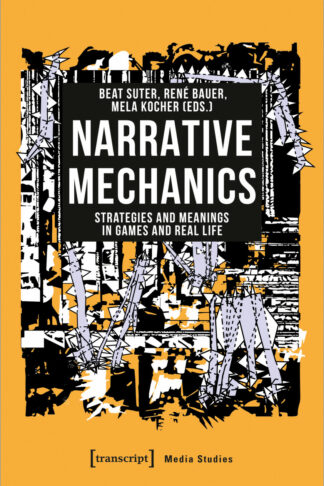
Narrative Mechanics. Strategies and Meanings in Games and Real Life | Beat Suter, René Bauer, Mela Kocher (eds.)
CHF 51.50Bei CeDe kaufen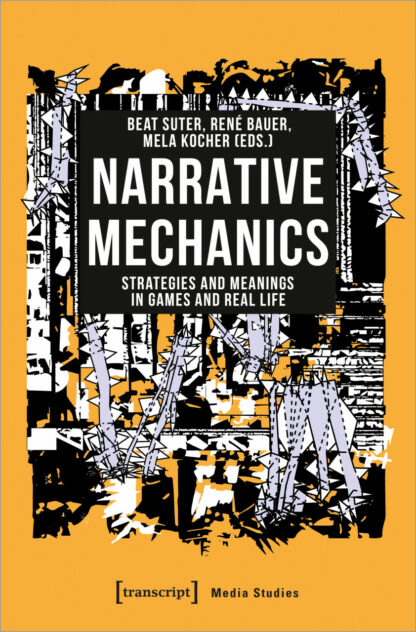
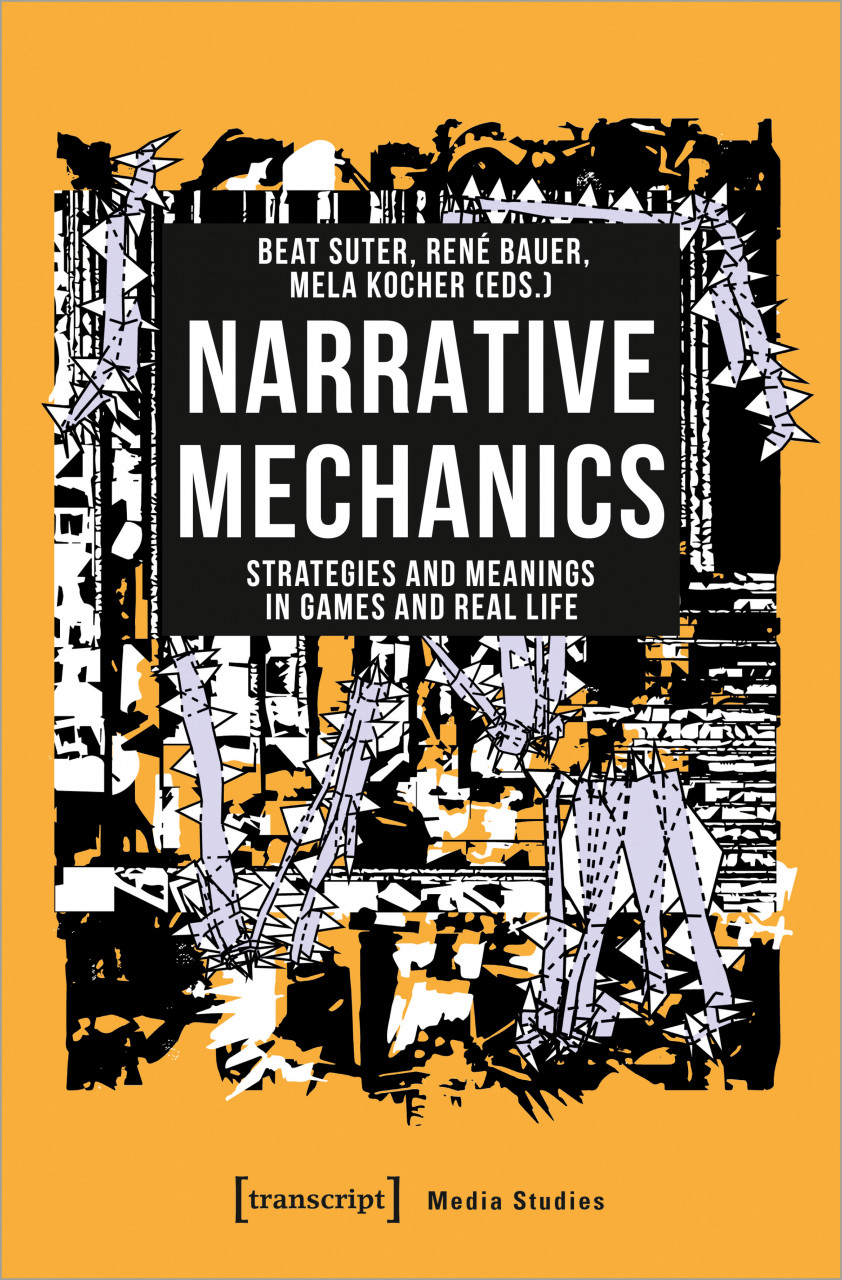
Narrative Mechanics. Strategies and Meanings in Games and Real Life | Beat Suter, René Bauer, Mela Kocher (eds.)
CHF 51.50What do stories in games have in common with political narratives?
This book identifies narrative strategies as mechanisms for meaning and manipulation in games and real life. It shows that the narrative mechanics so clearly identifiable in games are increasingly used (and abused) in politics and social life. They have »many faces«, displays and interfaces. They occur as texts, recipes, stories, dramas in three acts, movies, videos, tweets, journeys of heroes, but also as rewarding stories in games and as narratives in society – such as a career from rags to riches, the concept of modernity or market economy. Below their surface, however, narrative mechanics are a particular type of motivational design – of game mechanics.
362 Seiten, transcript, 2021
ISBN: 978-3-8376-5345-8Quick View -
![Design Ethnography - Epistemology and Methodology | Francis Müller [E-Book PDF]](https://publikationen.zhdk.ch/wp-content/uploads/2021/05/Design-Ethnography-324x486.jpg)
Design Ethnography – Epistemology and Methodology | Francis Müller [E-Book PDF]
Open Access
Design Ethnography – Epistemology and Methodology | Francis Müller [E-Book PDF]
This book describes methods for research on and research through design. It posits that ethnography is an appropriate method for design research because it constantly orients itself, like design projects, towards social realities.
93 pages, Springer, 2021
ISBN 978-3-030-60396-0Quick View -
Design Ethnography – Epistemology and Methodology | Francis Müller
CHF 43.90Bei CeDe kaufenDesign Ethnography – Epistemology and Methodology | Francis Müller
CHF 43.90This book describes methods for research on and research through design. It posits that ethnography is an appropriate method for design research because it constantly orients itself, like design projects, towards social realities.
93 pages, Springer, 2021
ISBN 978-3-0-3060395-3Quick View -
![Not at Your Service. Manifestos for Design | Björn Franke, Hansuli Matter (eds.) [E-Book PDF]](https://publikationen.zhdk.ch/wp-content/uploads/2021/03/142492561_3652536528135045_1684084371426617584_o-324x486.jpg)
Not at Your Service. Manifestos for Design | Björn Franke, Hansuli Matter (eds.) [E-Book PDF]
Open Access
Not at Your Service. Manifestos for Design | Björn Franke, Hansuli Matter (eds.) [E-Book PDF]
Not at Your Service: Manifestos for Design brings together the broad spectrum of beliefs, subjects and practices of designers at Zurich University of the Arts. It offers different approaches and insights on the present-day role and impact of design. It is not conceived as a finished project, but as a fluid document of its time. Collaborative design, interaction within complex systems, attention economics, the ecological shift, visual literacy, gender-neutral design, «quick and dirty» design ethnography, social responsibility, the value of ugliness, death futures, immersive technologies, identity and crises, design as a transformative discipline – all of these topics are presented for debate with passion, conviction and professional expertise.
526 pages (PDF), Birkhäuser, 2021
ISBN 978-3-0356-2275-1Quick View -
Not at Your Service. Manifestos for Design | Björn Franke, Hansuli Matter (eds.)
CHF 52.90Bei CeDe kaufenNot at Your Service. Manifestos for Design | Björn Franke, Hansuli Matter (eds.)
CHF 52.90Not at Your Service: Manifestos for Design brings together the broad spectrum of beliefs, subjects and practices of designers at Zurich University of the Arts. It offers different approaches and insights on the present-day role and impact of design. It is not conceived as a finished project, but as a fluid document of its time. Collaborative design, interaction within complex systems, attention economics, the ecological shift, visual literacy, gender-neutral design, «quick and dirty» design ethnography, social responsibility, the value of ugliness, death futures, immersive technologies, identity and crises, design as a transformative discipline – all of these topics are presented for debate with passion, conviction and professional expertise.
526 pages, Birkhäuser, 2021
ISBN 978-3-0356-2272-0Quick View -
![Architectonics of Game Spaces | Andri Gerber, Ulrich Götz (eds.) [E-Book PDF]](https://publikationen.zhdk.ch/wp-content/uploads/2019/12/Architectonics-scaled-1-324x486.jpg)
Architectonics of Game Spaces | Andri Gerber, Ulrich Götz (eds.) [E-Book PDF]
Open Access
Architectonics of Game Spaces | Andri Gerber, Ulrich Götz (eds.) [E-Book PDF]
What consequences does the design of the virtual yield for architecture and to what extent can the nature of architecture be used productively to turn game-worlds into sustainable places – over here, in «reality»?
This pioneering collection gives an overview of contemporary developments in designing video games and of the relationships such practices have established with the design of architecture. Due to their often simulatory nature, games reveal constructions of reality while positively impacting spatial ability and allowing for alternative avenues to complex topics and processes of negotiation. Granting insight into the merging of the design of real and virtual environments, this volume offers an invaluable platform for further debate.343 pages, transcript, 2019
ISBN 978-3-8394-4802-1Quick View -

Architectonics of Game Spaces | Andri Gerber, Ulrich Götz (eds.)
CHF 48.70Bei CeDe kaufen
Architectonics of Game Spaces | Andri Gerber, Ulrich Götz (eds.)
CHF 48.70What consequences does the design of the virtual yield for architecture and to what extent can the nature of architecture be used productively to turn game-worlds into sustainable places – over here, in «reality»?
This pioneering collection gives an overview of contemporary developments in designing video games and of the relationships such practices have established with the design of architecture. Due to their often simulatory nature, games reveal constructions of reality while positively impacting spatial ability and allowing for alternative avenues to complex topics and processes of negotiation. Granting insight into the merging of the design of real and virtual environments, this volume offers an invaluable platform for further debate.343 pages, transcript, 2019
ISBN 978-3-8376-4802-7Quick View -
No style | Peter Vetter, Katharina Leuenberger, Meike Eckstein
CHF 55.00Bei CeDe kaufen
No style | Peter Vetter, Katharina Leuenberger, Meike Eckstein
CHF 55.00Ernst Keller (1891-1968). Teacher and pioneer of the Swiss Style
In various different places, particularly in the USA, when writing the history of graphic design, Ernst Keller is referred to as the father of Swiss Style, later International Typographic Style. This is down to the large number of Keller students, who later shaped this Swiss Style and made it famous. Keller’s achievement is shown purely using his oeuvre, primarily his poster designs and his work on lettering and graphic design in architecture.
Ernst Keller’s contribution to the development of innovative, non-academic didactic principles in design training plays a fundamental role. His teaching activity starting in 1918 can be defined as one of the first systematic training programmes for graphic design in the world.
253 pages, Triest Verlag, 2017
ISBN 978-3-0-3863023-4Quick View -
Kein Stil | Peter Vetter, Katharina Leuenberger, Meike Eckstein
CHF 55.00Bei CeDe kaufen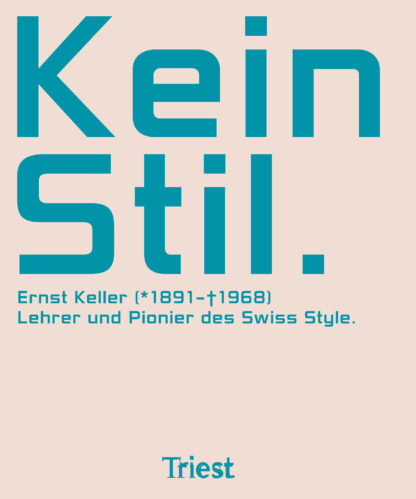
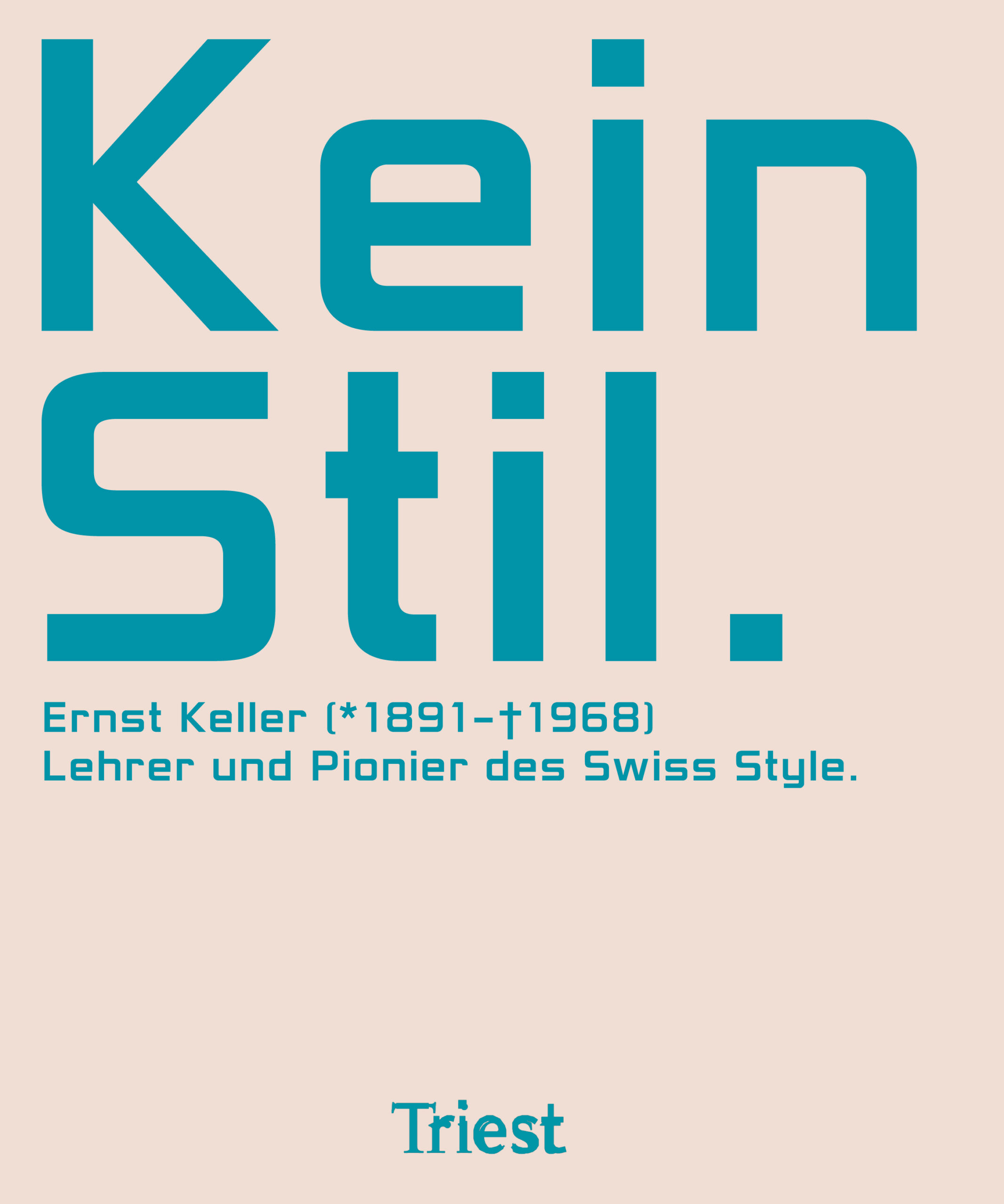
Kein Stil | Peter Vetter, Katharina Leuenberger, Meike Eckstein
CHF 55.00Ernst Keller (1891-1968). Lehrer und Pionier des Swiss Style
Verschiedentlich und insbesondere in den USA, wird in der Geschichtsschreibung des Graphic Design auf Ernst Keller als Vater des sogenannten Swiss Style, später International Typographic Style, hingewiesen. Diese Tatsache gründet auf der grossen Anzahl von Keller-Schülern, die später diesen Swiss Style geprägt und berühmt gemacht haben. Die Leistung von Keller wird einzig durch sein Oeuvre, vor allem seine Plakatgestaltung oder seine Beschäftigung im Zusammenhang mit Schrift- und Grafik in der Architektur, gewürdigt.
Fundamental jedoch ist Ernst Kellers Beitrag zur Entwicklung von innovativen, nicht akademischen didaktischen Prinzipien in der Gestaltungsausbildung. Seine Lehrtätigkeit ab 1918 kann als eines der weltweit ersten systematischen Ausbildungsprogramme für Graphic Design definiert werden.
253 Seiten, Triest Verlag, 2017
ISBN 978-3-0-3863022-7Quick View -
![Games and Rules | Beat Suter, Mela Kocher, René Bauer (eds.) [E-Book PDF]](https://publikationen.zhdk.ch/wp-content/uploads/2019/05/9783837643046yYphQWKAyKHAl_600x600-324x486.jpg)
Games and Rules | Beat Suter, Mela Kocher, René Bauer (eds.) [E-Book PDF]
Open Access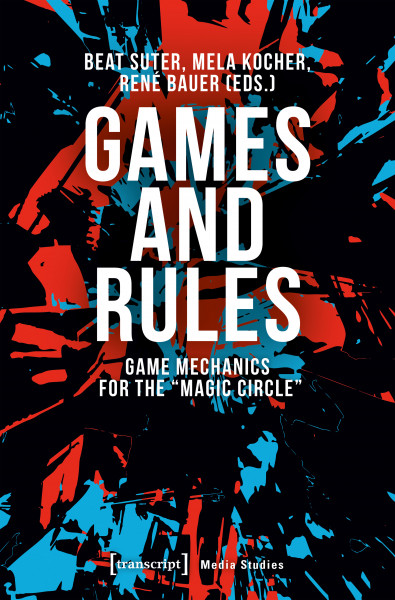
Games and Rules | Beat Suter, Mela Kocher, René Bauer (eds.) [E-Book PDF]
Game Mechanics for the «Magic Circle»
Why do we play games and why do we play them on computers? The contributors of «Games and Rules» take a closer look at the core of each game and the motivational system that is the game mechanics. Games are control circuits that organize the game world with their (joint) players and establish motivations in a dedicated space, a «Magic Circle», whereas game mechanics are constructs of rules designed for interactions that provide gameplay. Those rules form the base for all the excitement and frustration we experience in games. This anthology contains individual essays by experts and authors with backgrounds in Game Design and Game Studies, who lead the discourse to get to the bottom of game mechanics in video games and the real world – among them Miguel Sicart and Carlo Fabricatore.
322 Seiten (PDF), transcript, 2018
ISBN 978-3-8394-4304-0Quick View -
Games and Rules | Beat Suter, Mela Kocher, René Bauer (eds.)
CHF 48.70Bei CeDe kaufenGames and Rules | Beat Suter, Mela Kocher, René Bauer (eds.)
CHF 48.70Game Mechanics for the «Magic Circle»
Why do we play games and why do we play them on computers? The contributors of «Games and Rules» take a closer look at the core of each game and the motivational system that is the game mechanics. Games are control circuits that organize the game world with their (joint) players and establish motivations in a dedicated space, a «Magic Circle», whereas game mechanics are constructs of rules designed for interactions that provide gameplay. Those rules form the base for all the excitement and frustration we experience in games. This anthology contains individual essays by experts and authors with backgrounds in Game Design and Game Studies, who lead the discourse to get to the bottom of game mechanics in video games and the real world – among them Miguel Sicart and Carlo Fabricatore.
322 pages, transcript, 2018
ISBN 978-3-8376-4304-6Quick View -
![Designethnografie. Methodologie und Praxisbeispiele | Francis Müller [E-Book PDF]](https://publikationen.zhdk.ch/wp-content/uploads/2019/05/775132101-324x486.jpg)
Designethnografie. Methodologie und Praxisbeispiele | Francis Müller [E-Book PDF]
Open Access
Designethnografie. Methodologie und Praxisbeispiele | Francis Müller [E-Book PDF]
Das Lehrbuch entwickelt Methoden für die Designrecherche, denn Designen erfordert und erzeugt zugleich Wissen, was in der Praxis oftmals intuitiv passiert. Wird die Erzeugung dieses Wissens jedoch methodisch geleitet und reflektiert, dann stärkt dies die Designdisziplin und begünstigt ihre interdisziplinäre Vernetzung. Die Ethnografie ist hierzu eine geeignete Methode: Designethnografie bedeutet, dass eine Designerin in eine soziale Lebenswelt eintaucht, dort bestimmte Wirklichkeitsausschnitte beobachtet, analysiert und sie verändert – zum Beispiel mit Intervention und partizipativen Ansätzen. Werden solche Verfahren dokumentiert und theoretisch reflektiert, dann werden designspezifische Erkenntnismodi sichtbar.
332 Seiten (PDF), Springer, 2018
ISBN 978-3-658-21388-6Quick View -
Designethnografie. Methodologie und Praxisbeispiele | Francis Müller
CHF 41.50Bei CeDe kaufenDesignethnografie. Methodologie und Praxisbeispiele | Francis Müller
CHF 41.50Das Lehrbuch entwickelt Methoden für die Designrecherche, denn Designen erfordert und erzeugt zugleich Wissen, was in der Praxis oftmals intuitiv passiert. Wird die Erzeugung dieses Wissens jedoch methodisch geleitet und reflektiert, dann stärkt dies die Designdisziplin und begünstigt ihre interdisziplinäre Vernetzung. Die Ethnografie ist hierzu eine geeignete Methode: Designethnografie bedeutet, dass eine Designerin in eine soziale Lebenswelt eintaucht, dort bestimmte Wirklichkeitsausschnitte beobachtet, analysiert und sie verändert – zum Beispiel mit Intervention und partizipativen Ansätzen. Werden solche Verfahren dokumentiert und theoretisch reflektiert, dann werden designspezifische Erkenntnismodi sichtbar.
332 Seiten, Springer, 2018
ISBN 978-3-658-21387-9Quick View -
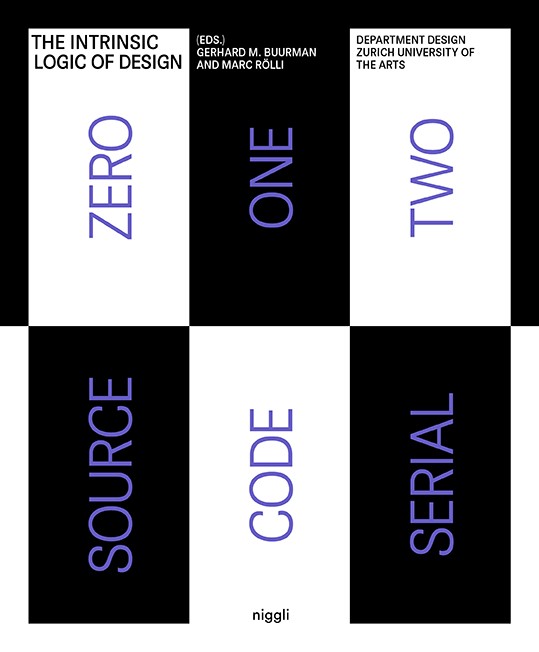
The Instrinsic Logic of Design | Gerhard M. Buurman, Marc Rölli (eds.)
CHF 48.00Bei CeDe kaufen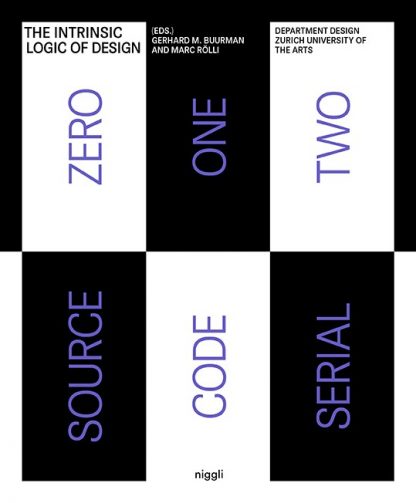
The Instrinsic Logic of Design | Gerhard M. Buurman, Marc Rölli (eds.)
CHF 48.00Mit der in letzter Zeit rapide wachsenden Bedeutung des Designs für ökonomische und technische Entwicklungen verbinden sich zunehmend auch gesellschaftliche Fragestellungen von höchster Brisanz. Wie aber ist es möglich, diese Dimensionen des Designs – im Sinne eines «Social Designs» – zu erforschen und sichtbar zu machen? Die AutorInnen nehmen diese Frage zum Anlass, um die spezifischen Rationalitäten der im Design verwendeten Verfahren und Methoden zu beleuchten.
224 Seiten, Niggli, 2015
ISBN 978-3-7212-0933-4Quick View -
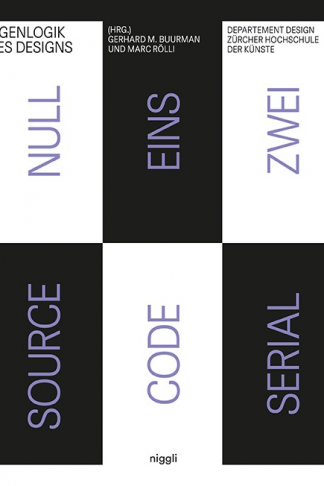
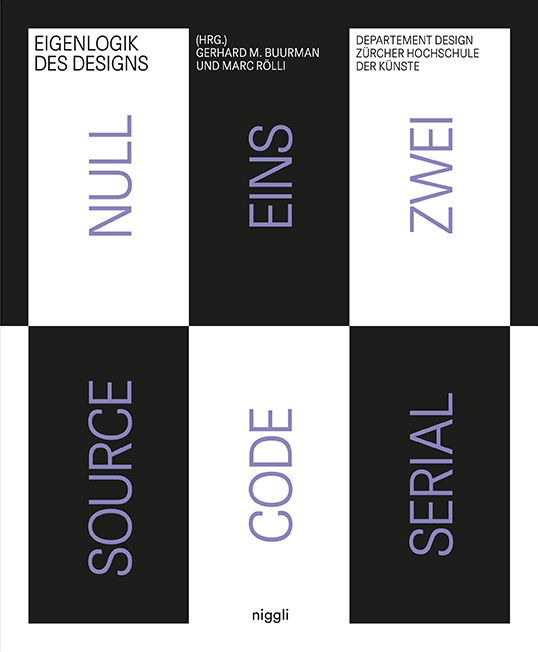
Eigenlogik des Designs | Gerhard M. Buurman, Marc Rölli (Hg.)
CHF 48.00Bei CeDe kaufen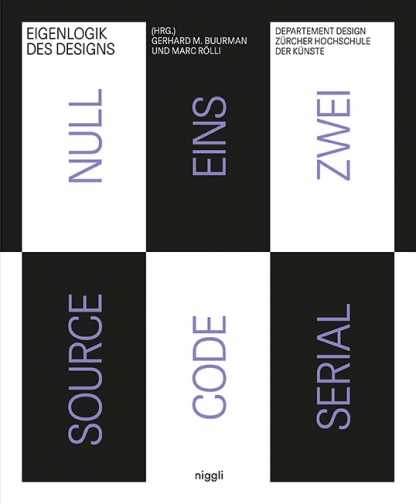
Eigenlogik des Designs | Gerhard M. Buurman, Marc Rölli (Hg.)
CHF 48.00Mit der in letzter Zeit rapide wachsenden Bedeutung des Designs für ökonomische und technische Entwicklungen verbinden sich zunehmend auch gesellschaftliche Fragestellungen von höchster Brisanz. Wie aber ist es möglich, diese Dimensionen des Designs – im Sinne eines «Social Designs» – zu erforschen und sichtbar zu machen? Die AutorInnen nehmen diese Frage zum Anlass, um die spezifischen Rationalitäten der im Design verwendeten Verfahren und Methoden zu beleuchten.
224 Seiten, Niggli, 2015
ISBN 978-3-7212-0931-0Quick View -
![Fines Hominis? Zur Geschichte der philosophischen Anthropologiekritik | Marc Rölli (Hg.) [E-Book PDF]](https://publikationen.zhdk.ch/wp-content/uploads/2019/05/image-27-324x486.png)
Fines Hominis? Zur Geschichte der philosophischen Anthropologiekritik | Marc Rölli (Hg.) [E-Book PDF]
Open Access
Fines Hominis? Zur Geschichte der philosophischen Anthropologiekritik | Marc Rölli (Hg.) [E-Book PDF]
Seit bereits gut 50 Jahren geistern in der Philosophie die Thesen vom «Verschwinden des Menschen», seiner «Auflösung» oder seinem «Ende» herum. Vom «Tod des Subjekts» ist immer wieder die Rede. Es etabliert sich eine philosophische Skepsis, die sich auf «den Menschen» bezieht und über ihn hinausweist. Dieses Buch klärt über die Hintergründe und Bedeutungen dieser als «postmodern» geltenden Postulate auf, ohne dabei in polemische Vorurteile zu verfallen. In den einzelnen Beiträgen werden die historisch einschlägigen Kritiken rekonstruiert, die sich gegen eine anthropologische Erhöhung oder Verabsolutierung «des Menschen» aussprechen. Zugleich bezieht der Band philosophisch Position gegen den aktuellen Trend einer Wiederbelebung naturalistischer Menschenbilder in Biowissenschaften und Hirnforschung.
232 Seiten (PDF), transcript, 2015
ISBN 978-3-8394-2956-3Quick View






17–32 von 36 Ergebnissen werden angezeigtNach Aktualität sortiert