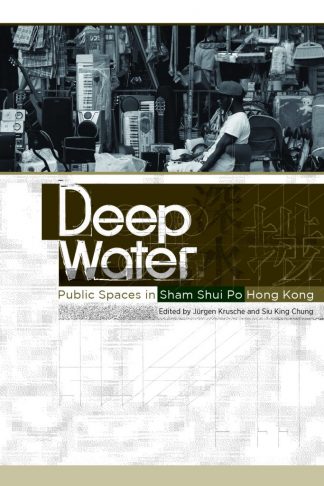
Deep Water | Jürgen Krusche, Siu King Chung (eds.) [E-Book PDF]
Public Spaces in Sham Shui Po, Hong Kong
In strongly globalized cities there are fast transformation processes on the move, reinforced by the neo-liberal policies and the resulting economic, social, urban and cultural policy strategies. From a research perspective, a main question is how to capture, describe and interpret such developments taking place at a fast pace.
Researchers and artsts from Hong Kong and Zurich worked together in a small area of Sham Shui Po, one of the poorest and still most traditional Districts of Hong Kong, to investigate its public spaces according to topics of urban transformation and gentrification.
Claim. Reclaim. Occupy. Enlarge. Extend. These are everyday words in Hong Kong.
In the high density district of Sham Shui Po, which translates as Deep Water Pier for its former maritime importance, the people tend to be friendly, community-minded, resourceful, and down-to-earth. They also, statistically, have the lowest incomes in Hong Kong.
The area has been changing for decades, centuries. The post-war factories have all relocated to Mainland China. The temple for Tin Hau, the goddess of the sea, was erected near the harbour in 1901 yet today, the goddess looks out at hawkers selling second-hand electronics.
Regulations for urban public spaces of pavements, alleys, and streets in Hong Kong are sometimes negotiable. It can be unclear what is legal in Sham Shui Po. Can carpenters carry out their work on the footpath? Can a homeless person leave belongings in front of a bank? Can trash pickers store their items on the streets? Deep Water explores this “politics of space”, undoubtedly an idiosyncratic beauty of the city.
ZHdK: Institute for Contemporary Art Research (IFCAR)
Deep Water | Jürgen Krusche, Siu King Chung (eds.)
Public Spaces in Sham Shui Po, Hong Kong
In strongly globalized cities there are fast transformation processes on the move, reinforced by the neo-liberal policies and the resulting economic, social, urban and cultural policy strategies. From a research perspective, a main question is how to capture, describe and interpret such developments taking place at a fast pace.
Researchers and artsts from Hong Kong and Zurich worked together in a small area of Sham Shui Po, one of the poorest and still most traditional Districts of Hong Kong, to investigate its public spaces according to topics of urban transformation and gentrification.
Kunst des Forschens. Praxis eines ästhetischen Denkens | Elke Bippus (Hg.) [E-Book PDF]
Künstlerische Forschungen können zu den Verfahren gezählt werden, die auch ein «implizites Wissen», Brüche und Ungeklärtes fruchtbar machen. Solche Aspekte stehen in Widerspruch zu einer Zeit, in der das Bildungsideal Humboldts einer Ökonomisierung weichen und Wissen als neue Form des Kapitals verfügbar sein soll. Bruce Nauman hat Kunst als ein «Instrument» beschrieben, «mit dem man sich eine Aktivität des Erforschens aneignen kann». Forschen ist in diesem Sinne als Aktivität vorgestellt, welche die übliche Asymmetrie zwischen wissendem Forscher und Anwender unterbricht und damit eine politische Komponente gewinnt.
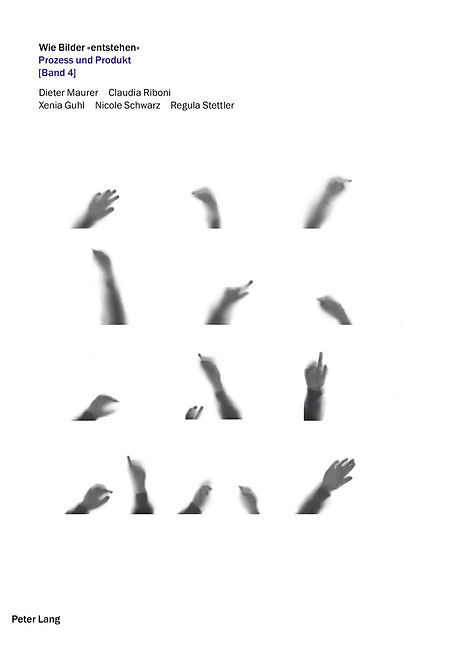
In einer umfangreichen Untersuchung widmen sich Dieter Maurer und Claudia Riboni den frühesten Zeichnungen und Malereien von Kindern und auf diese Weise der «untersten» Struktur des Bildhaften und Ästhetischen: Wie erscheinen, «entstehen» Bilder? Welche Eigenschaften, Strukturen und Entwicklungen lassen sich in frühen graphischen Äusserungen beobachten? Sind frühe Bilder Produkte oder Prozesse? Sind frühe Bildmerkmale allgemein, abhängig vom Kontext ihrer Produktion, oder individuell? Worin besteht frühe bildhafte Erkenntnis und Ästhetik? Auf welche allgemeinen Bestimmungen von «Bild» oder «Bildern» verweist die Bildgenese? Auf welche allgemeinen Aspekte des frühen symbolischen Verhaltens verweisen frühe Bilder? Dieser vierte Band stellt eine Untersuchung des frühen Bildprozesses dar, Kinder in ihren ersten sechs Lebensjahren dokumentierend. Im Zentrum der Erörterung steht dabei die Frage, ob die Beschreibung von Bildern als fertige Produkte sich in einer Prüfung anhand des Bildprozesses bestätigen lassen oder aber relativiert beziehungsweise revidiert werden müssen. Die Untersuchung wurde in Zusammenarbeitmit Xenia Guhl, Nicole Schwarz und Regula Stettler durchgeführt.
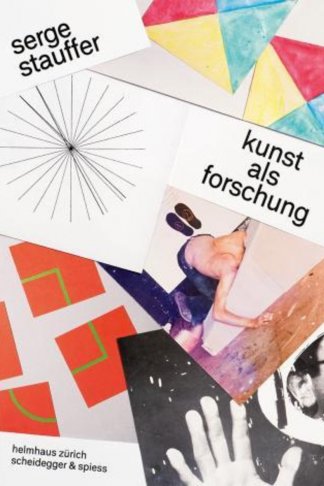
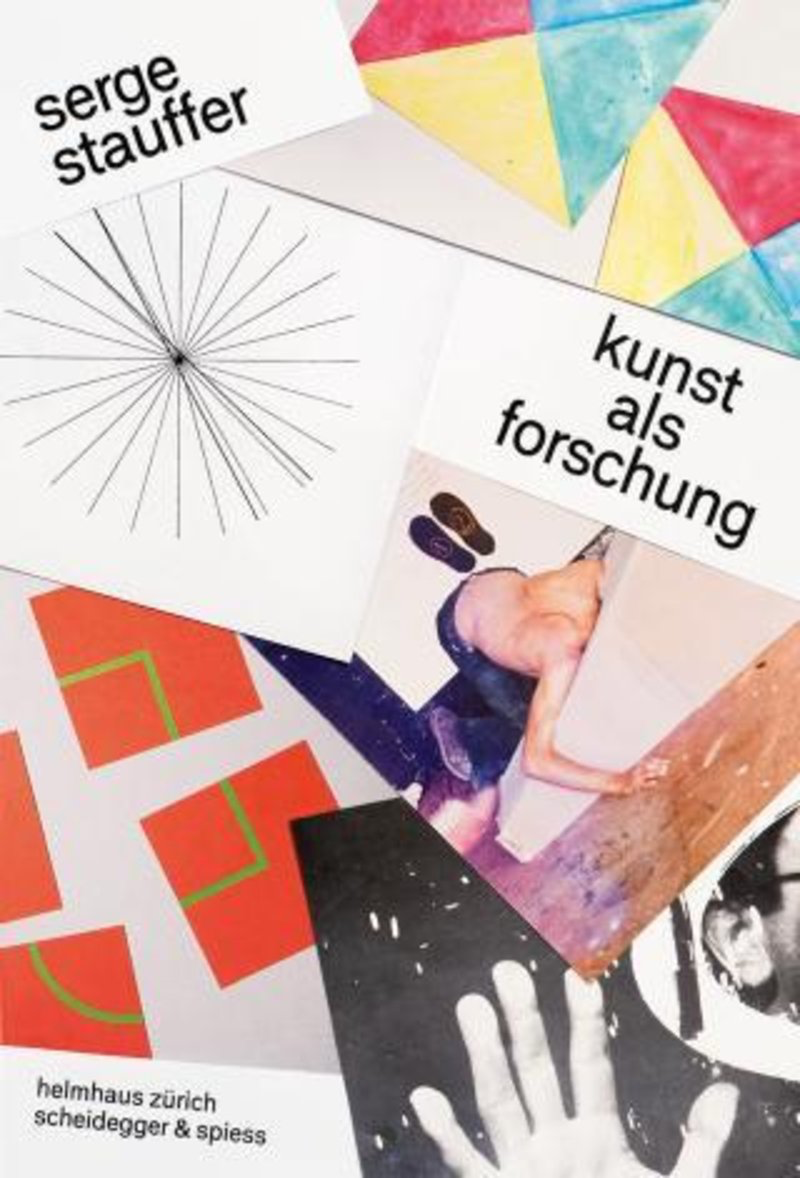
Serge Stauffer – Kunst als Forschung | Michael Hiltbrunner, Helmhaus Zürich (Hg.)
CHF 49.00
Essays, Gespräche, Übersetzungen, Studien
Dieses Buch leistet die erste Aufarbeitung von Werk und Nachlass des bedeutenden Schweizer Künstlers, Kunstvermittlers und Duchamp-Spezialisten Serge Stauffer (1929-1989). Stauffer, der gleichzeitig als Theoretiker, Performer, Autor, Übersetzer und Archivar amtete, war ein visionärer Akteur. Sein Werk zeugt von Humor und Ernsthaftigkeit, von Genauigkeit und Grenzen sprengendem Weitblick. Dazu stand er mit Marcel Duchamp in Kontakt, über den er auch forschte und mehrfach publizierte, und er pflegte mit André Thomkins eine lebenslange Freundschaft.

![Deep Water | Jürgen Krusche, Siu King Chung (eds.) [E-Book PDF]](https://publikationen.zhdk.ch/wp-content/uploads/2019/04/Deep-water-cover_output_-final-01-712x1024-1.jpg)
![Kunst des Forschens. Praxis eines ästhetischen Denkens | Elke Bippus (Hg.) [E-Book PDF]](https://publikationen.zhdk.ch/wp-content/uploads/2019/05/image-3-324x486.png)
![Wie Bilder "entstehen" 4 | Xenia Guhl, Dieter Maurer, Claudia Riboni, Nicole Schwarz, Regula Stettler [E-Book PDF]](https://publikationen.zhdk.ch/wp-content/uploads/2019/04/9783034313346xxl-324x486.jpg)