
Beschreibung
ZHdK: Institute for the Performing Arts and Film (IPF)

Die Frage, wie wir Vokale erzeugen und wie sie sich in der Folge akustisch «abbilden», scheint im Wesentlichen geklärt: Wir phonieren und artikulieren. Wir produzieren mit den Stimmbändern einen allgemeinen Klang oder ein Geräusch und formen diese über die Resonanzen von Rachen, Mund und Nase zu einem einzelnen, spezifischen Laut. Dementsprechend werden Vokale akustisch über charakteristische Energiemaxima im Spektrum, über sogenannte «Formanten» beschrieben. Intellektuelle und empirische Gründe, wie sie in dieser Schrift zusammengestellt und erläutert werden, geben aber Anlass zu einer ausgeprägten Skepsis gegenüber einer solchen Auffassung. Die vorliegenden Darstellungen und Erläuterungen lassen folgern, dass eine nachvollziehbare Theorie der Akustik von Stimme und stimmhafter Sprache, und mit ihr ein entsprechendes Verstehen von Vokalen als Leistung und Formgebung der Stimme, bis heute aussteht. Die Frage nach der Akustik der Vokale erweist sich mithin als ein ungelöstes Grundlagenproblem.
subTexte 08
112 Seiten, Institute for the Performing Arts and Film ZHdK, 2012
ISBN 978-3-906437-39-2
Printausgabe vergriffen
ZHdK: Institute for the Performing Arts and Film (IPF)
It seems as if the fundamentals of how we produce vowels and how they are acoustically represented have been clarified: we phonate and articulate. Using our vocal chords, we produce a vocal sound or noise which is then shaped into a specific vowel sound by the resonances of the pharyngeal, oral, and nasal cavities, that is, the vocal tract. Accordingly, the acoustic description of vowels relates to vowelspecific patterns of relative energy maxima in the sound spectra, known as patterns of formants. The intellectual and empirical reasoning presented in this treatise, however, gives rise to scepticism with respect to this understanding of the sound of the vowel. The reflections and materials presented provide reason to argue that, up to now, a comprehensible theory of the acoustics of the voice and of voiced speech sounds is lacking, and consequently, no satisfying understanding of vowels as an achievement and particular formal accomplishment of the voice exists. Thus, the question of the acoustics of the vowel – and with it the question of the acoustics of the voice itself – proves to be an unresolved fundamental problem.
subTexte 12
280 pages, Peter Lang, 2016
978-3-0-3432031-3
It seems as if the fundamentals of how we produce vowels and how they are acoustically represented have been clarified: we phonate and articulate. Using our vocal chords, we produce a vocal sound or noise which is then shaped into a specific vowel sound by the resonances of the pharyngeal, oral, and nasal cavities, that is, the vocal tract. Accordingly, the acoustic description of vowels relates to vowelspecific patterns of relative energy maxima in the sound spectra, known as patterns of formants. The intellectual and empirical reasoning presented in this treatise, however, gives rise to scepticism with respect to this understanding of the sound of the vowel. The reflections and materials presented provide reason to argue that, up to now, a comprehensible theory of the acoustics of the voice and of voiced speech sounds is lacking, and consequently, no satisfying understanding of vowels as an achievement and particular formal accomplishment of the voice exists. Thus, the question of the acoustics of the vowel – and with it the question of the acoustics of the voice itself – proves to be an unresolved fundamental problem.
subTexte 12
280 pages, Peter Lang, 2016
978-3-0343-2391-8


Strategien der Authentizität im aktuellen Dokumentarfilm
Ausgehend von zwei aktuellen Dokumentarfilmen, «Der Kick» (Andres Veiel) und «Zur falschen Zeit am falschen Ort» (Tamara Milosevic), die sich mit unterschiedlichen Verfahren demselben Mordfall widmen, rückt subTexte 02 die Frage des Wahrheitsgehaltes von nicht-fiktionalen Bildern in den Mittelpunkt. Können wir den technisch aufbereiteten Bilderwelten noch trauen? – In Gesprächen und Essays erörtern Filmschaffende, Theoretikerinnen und Theoretiker die gedanklichen und gestalterischen Prozesse, die zur individuellen Darstellung der vorgefundenen Wirklichkeit führen. Mit Beiträgen von Christoph Egger, Lucie Bader Egloff, Marille Hahne, Christian Iseli, Franz Reichle, Jan Sebening und Daniel D. Sponsel.
subTexte 02
67 Seiten (PDF), Institute for the Performing Arts and Film ZHdK, 2009
ISBN 978-3-906437-29-3
Printausgabe vergriffen
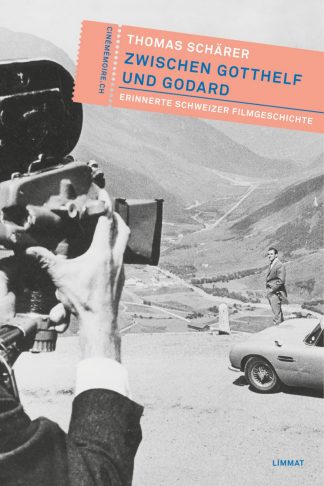
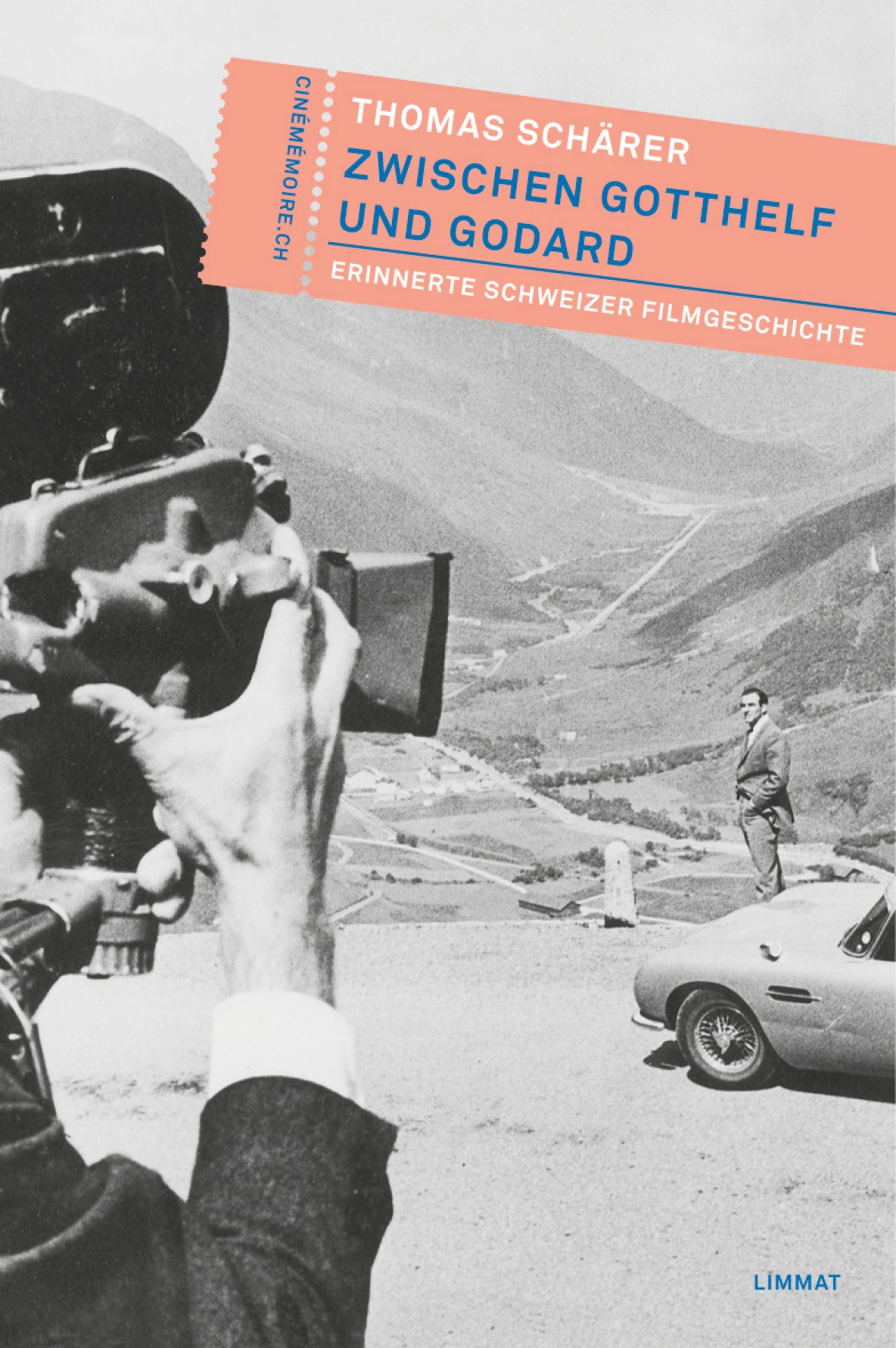
Erinnerte Schweizer Filmgeschichte 1958-1979
Dieses Buch verleiht über vierzig Schweizer Filmschaffenden eine Stimme. Ihre Erfahrungen im Übergang vom «Schweizer» zum «neuen» Film in der Schweiz verdichten sich zu einer facettenreichen Gesamtschau der Kinolandschaft in der sich rasch wandelnden Gesellschaft der 60er- und 70er-Jahre. Zu Wort kommen nicht nur Regisseure, sondern auch Cutter, Beleuchter, Skript, Labormitarbeiter, Schauspielerinnen, Schauspieler und Produzenten. Und auch Verleiher, Filmkritiker und Kinobesitzer schildern ihren damaligen Alltag, ihre Sorgen, Hoffnungen und Ziele.
704 Seiten, DVD, Limmat Verlag, 2014
ISBN 978-3-85791-653-3

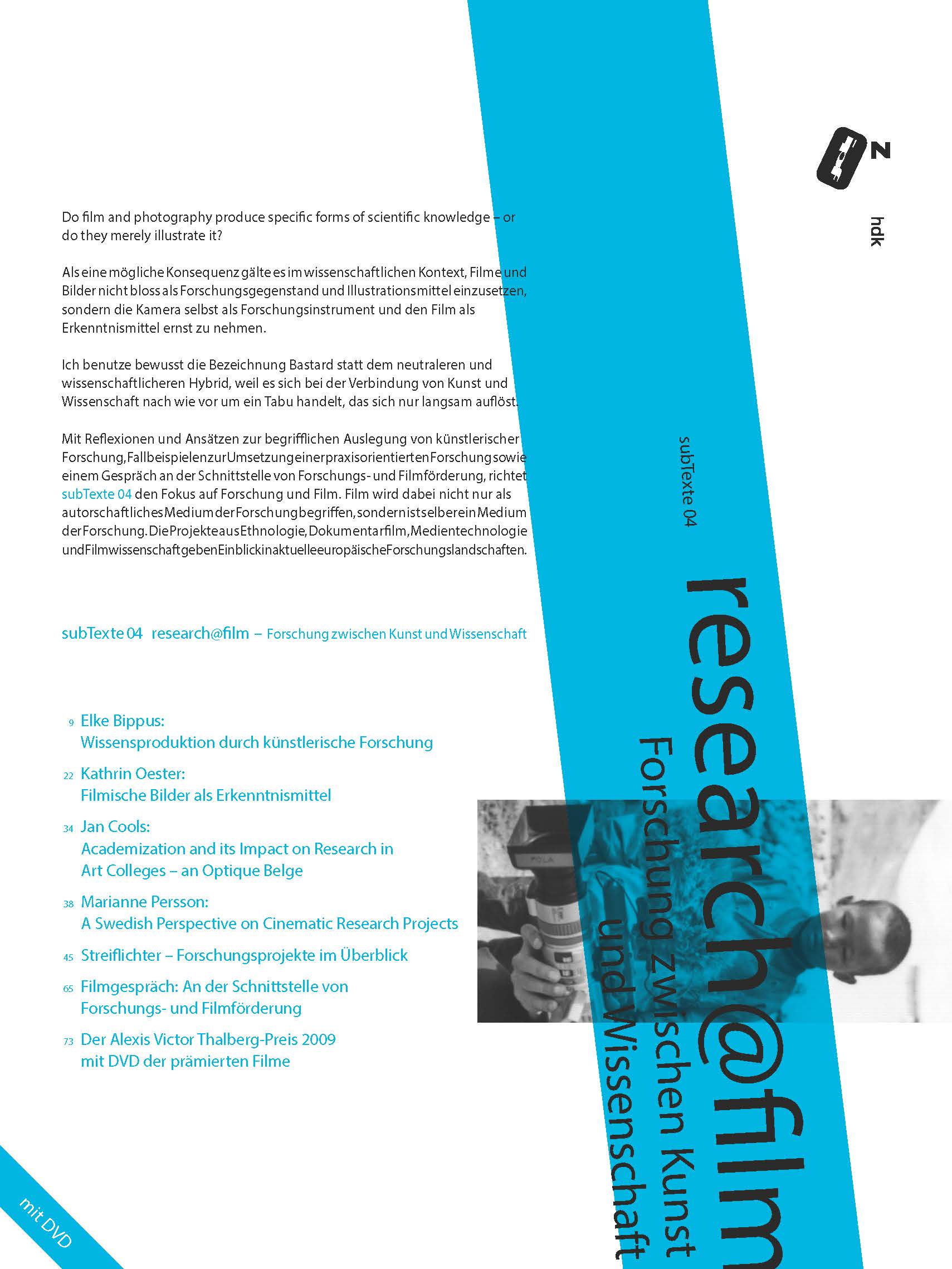
Forschung zwischen Kunst und Wissenschaft
Mit Reflexionen und Ansätzen zur begrifflichen Auslegung von künstlerischer Forschung, Fallbeispielen zur Umsetzung einer praxisorientierten Forschung sowie einem Gespräch an der Schnittstelle von Forschungs- und Filmförderung, richtet subTexte 04 den Fokus auf Forschung und Film. Film wird dabei nicht nur als autorschaftliches Medium der Forschung begriffen, sondern ist selber ein Medium der Forschung.
subTexte 04
84 Seiten, DVD, Institute for the Performing Arts and Film ZHdK, 2010
ISBN 978-3-89581-383-2
Printausgabe vergriffen
