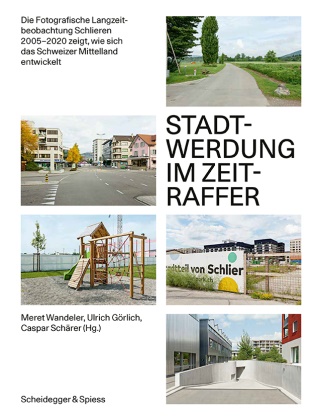
Die Fotografische Langzeitbeobachtung Schlieren 2005-2020 zeigt, wie sich das Schweizer Mittelland entwickelt
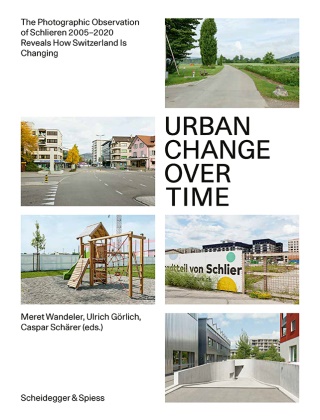
The long-term Photographic Observation Schlieren is a much-recognized unique research project that documents urban development in Switzerland. Over a period of fifteen years, a photographic record of building activity and urbanization processes was conducted to demonstrate how these are altering the character of a typical Swiss suburban community.
The chosen example was the town of Schlieren, bordering the city of Zurich to the west, whose population grew from 13,000 to 20,000 residents during the observation period of 2005-20. At Sixty-three locations throughout Schlieren, pictures were taken under identical conditions every two years that show the changes in the spatial interplay of buildings, streets, and green spaces. Simultaneously, series of topical detailed photographs were produced that focus on individual objects and tell of the appropriation, design, and aesthetics of habitats, such as store fronts, building entrances, playgrounds, parking entrances, etc.
This two-volume book brings together the results of this spectacular research. The Archive volume features the entire body of the eight images taken at each of the sixty-three sites to visualize the deep changes Schlieren has undergone during these fifteen years. The Essays volume combines the topical image series with essays that offer in-depth examination of the study’s subject, detailed analyses and interpretations, and interviews by expert authors from various disciplines.
Urban Change over Time | Meret Wandeler, Ulrich Görlich, Caspar Schärer (eds.)
CHF 79.00
The Photographic Long-Term Observation of Schlieren 2005-2020 shows how this part of Switzerland is developing
The long-term Photographic Observation Schlieren is a much-recognized unique research project that documents urban development in Switzerland. Over a period of fifteen years, a photographic record of building activity and urbanization processes was conducted to demonstrate how these are altering the character of a typical Swiss suburban community.
Kunst des Forschens. Praxis eines ästhetischen Denkens | Elke Bippus (Hg.)
CHF 37.50
Künstlerische Forschungen können zu den Verfahren gezählt werden, die auch ein «implizites Wissen», Brüche und Ungeklärtes fruchtbar machen. Solche Aspekte stehen in Widerspruch zu einer Zeit, in der das Bildungsideal Humboldts einer Ökonomisierung weichen und Wissen als neue Form des Kapitals verfügbar sein soll. Bruce Nauman hat Kunst als ein «Instrument» beschrieben, «mit dem man sich eine Aktivität des Erforschens aneignen kann». Forschen ist in diesem Sinne als Aktivität vorgestellt, welche die übliche Asymmetrie zwischen wissendem Forscher und Anwender unterbricht und damit eine politische Komponente gewinnt.
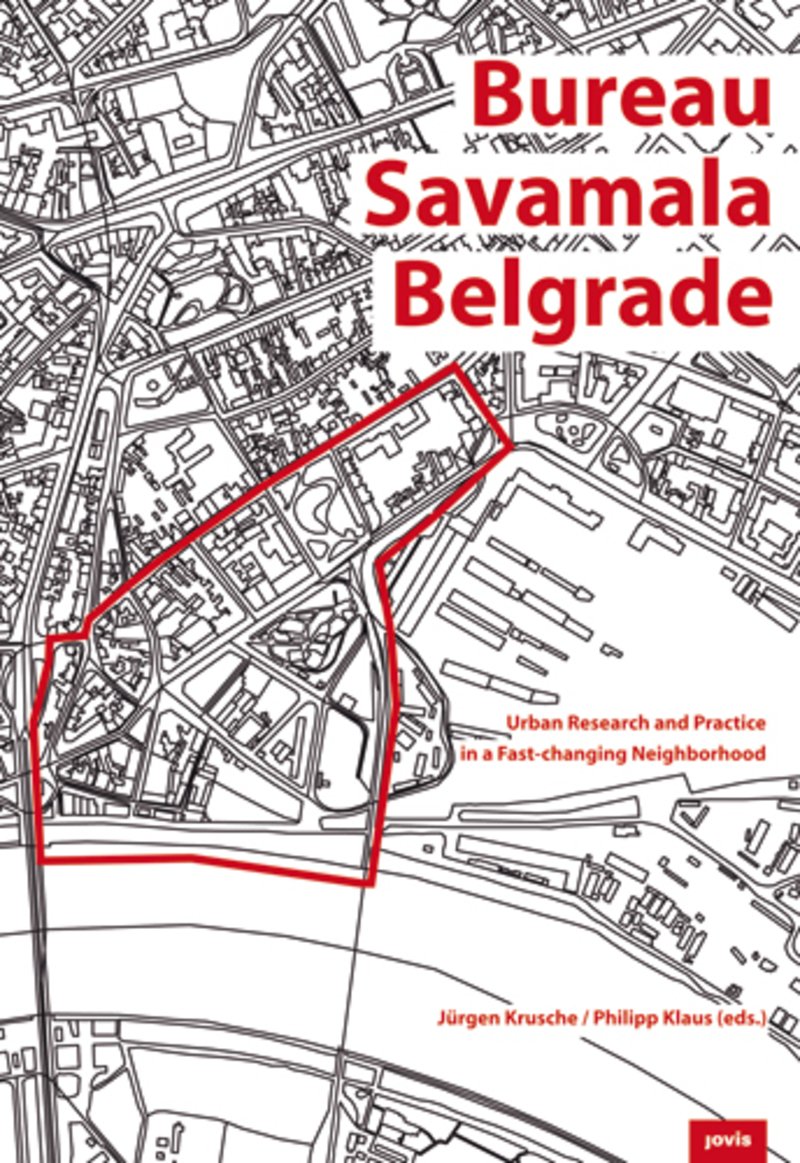
Bureau Savamala Belgrade | Jürgen Krusche, Philipp Klaus (eds.)
CHF 41.50
Urban Research and Practice in a Fast-changing Neighborhood
Savamala, ein traditionsreicher, seit den 1950er Jahren jedoch vernachlässigter Stadtteil Belgrads erfährt seit einiger Zeit einen raschen Wandel. Die Untersuchungen des Bureau Savamala von 2013 und 2014 zeigen die Veränderungen Savamalas sowohl in materieller und soziökonomischer Hinsicht als auch in der Wahrnehmung von Bewohnern und Besuchern Savamalas. Auf Basis der Ergebnisse werden die Möglichkeiten einer sanften und die Grenzen einer gesteuerten Aufwertung diskutiert. Gleichzeitig stellen einheimische Architekten, Künstler und Kulturschaffende ihre Projekte vor, die – zum Teil zusammen mit den Anwohnern – dazu beitragen sollen, Savamala auch ohne Gentrifizierung zu erneuern. (engl./serb.)
Aesthetics of the Commons | Cornelia Sollfrank, Felix Stalder, Shusha Niederberger (eds.)
CHF 30.00
What do a feminist server, an art space located in a public park in North London, a ‘pirate’ library of high cultural value yet dubious legal status, and an art school that emphasizes collectivity have in common? They all demonstrate that art can play an important role in imagining and producing a real quite different from what is currently hegemonic; that art has the possibility to not only envision or proclaim ideas in theory, but also to realize them materially.
![Fotografische Langzeitbeobachtung Schlieren 2005–2020 | Ulrich Görlich, Meret Wandeler (Hg.) [E-Book PDF]](https://publikationen.zhdk.ch/wp-content/uploads/2021/06/Fotografische-Langzeitbeobachtung-324x486.jpg)