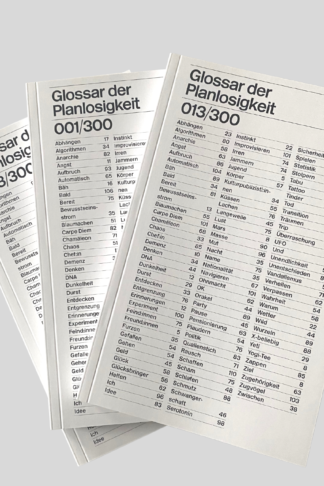
Glossar der Planlosigkeit | MA Kulturpublizistik ZHdK Jahrgang 2020
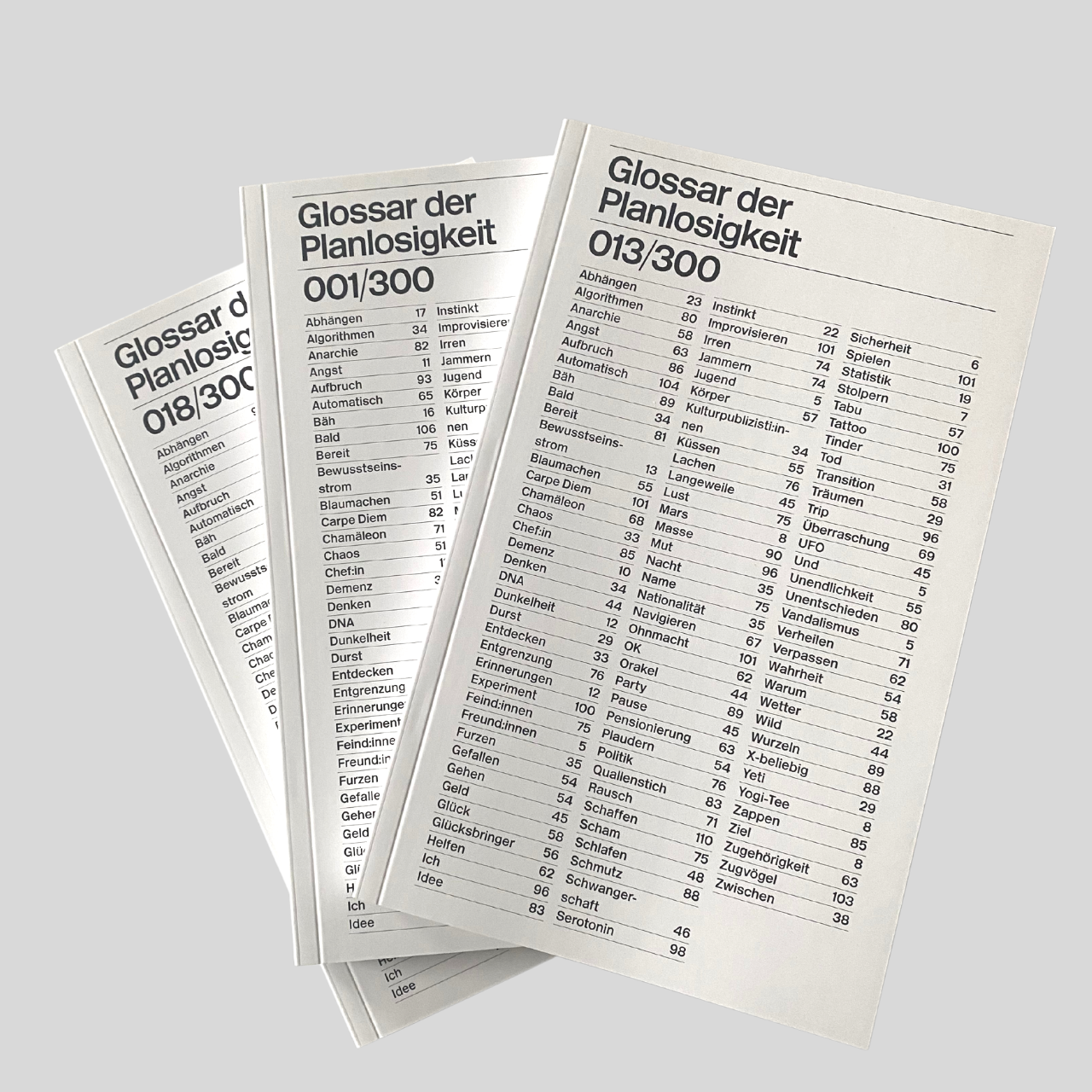
«Glossar der Planlosigkeit» heisst die Publikation der Kulturpublizistikstudierenden vom Jahrgang 2020. Darin gehts um verpasste Flüge, Nächte im Moonliner & Reisen ohne bekanntes Ziel. Elf Studierende haben geschrieben, konzipiert und redigiert. Nach eineinhalb Jahren findet das Projekt im Mai 2022 sein Ende – jedes Exemplar ist ein Einzelstück, das von einem Algorithmus kuratiert wurde.
Eine Publikation des MA Kulturpublizistik der ZHdK, mit 101 Bild- und Textbeiträgen von Livio Baumgartner, Laura Breitschmid, Oliver Brunko, Stefanie Ehrler, Nina Gehrig, Livia Grossenbacher, Noëlle Guidon, Vera Mattmann, Moriz Oberberger, Lyenne Perkmann, Noëmi Roos, Natalie Schärer, Sandino Scheidegger, Karoline Schreiber, Ava Slappnig, Tobias Söldi, Alice Sommer, Hayahisa Tomiyasu, Robin Waart und Jonas Wandeler.
ZHdK: Vertiefung Kulturpublizistik im Master Art Education
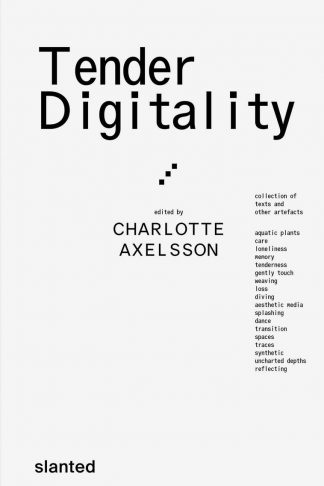
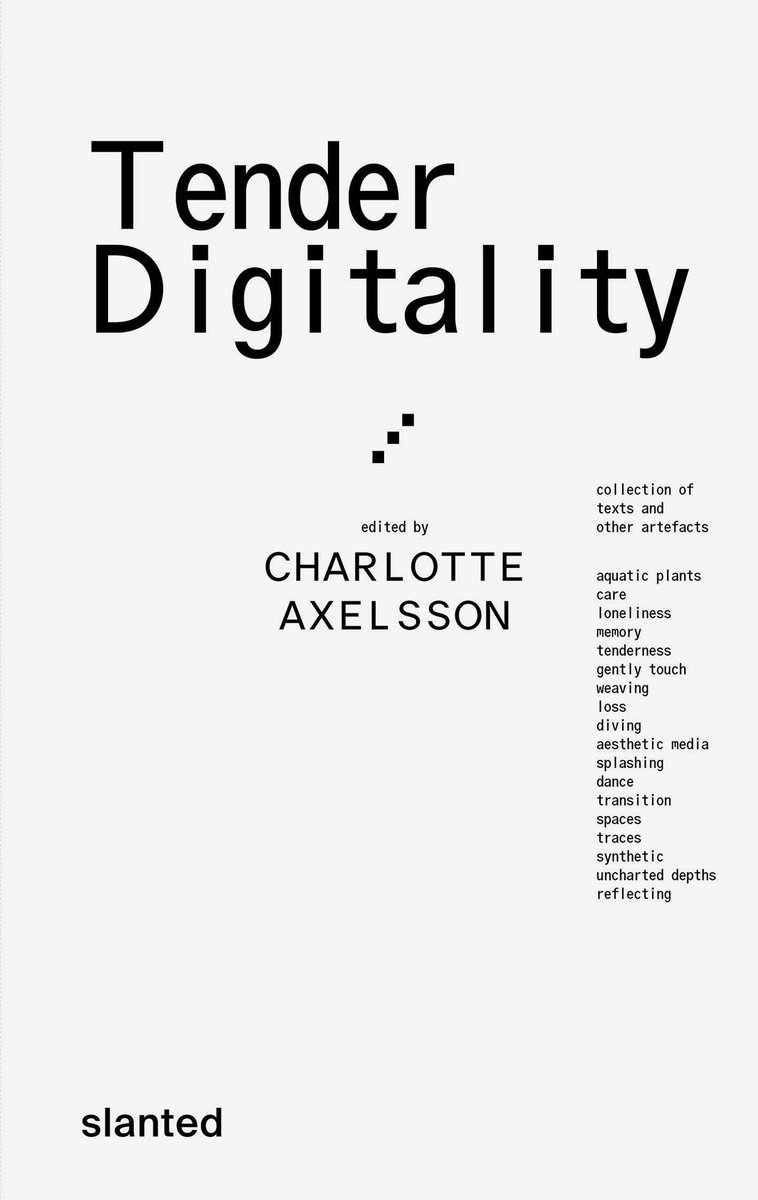
«Tender Digitality» beschreibt ein ästhetisch orientiertes Konzept, das ein binäres System in Schwingung versetzt und Menschen als Human Digitalus darstellt. Dabei reagiert es auf das Bedürfnis, Sinnlichkeit, Wahrnehmung, Intuition und Wohlbefinden in digitalen Umgebungen zu erleben, diese Erfahrung greifbar zu machen und dafür eine Sprache zu entwickeln.»Tender Digitality» operiert im Raum zwischen analog und digital, sozialen und technischen Phänomenen, welches es in sich ständig verändernde, niemals fixierte Muster einwebt.
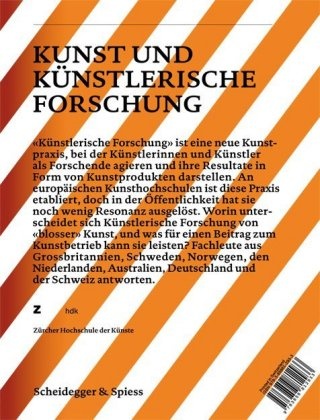
Kunst und künstlerische Forschung – Art and artistic research | Zürcher Jahrbuch der Künste
CHF 49.00
‚Künstlerische Forschung‘ bezeichnet eine spezifische Kunstpraxis, bei der die Künstlerinnen und Künstler selbst als Forschende agieren und ihre Resultate in Form von Kunstprodukten darstellen. Nachdem diese Praxis in den 1990er-Jahren besonders im Bereich der Visual Arts zu einem wichtigen Diskussionsfeld der internationalen Kunstausbildung wurde, hat sie sich seit neuestem auch in anderen Bereichen etabliert: in Design, Theater, Film, Musik und Tanz. Dabei ist eine zentrale Frage immer noch ungelöst: Was genau ist der Unterschied zwischen Kunst und künstlerischer Forschung? Nur wenn klar ist, worin sich die neue Forschungspraxis von Kunst einerseits und von traditioneller Forschung anderseits unterscheidet, kann sie sich als spezifisches Tätigkeitsfeld etablieren. Dieser Begriffsklärung spürt das vorliegende Buch nach. (dt./engl.)
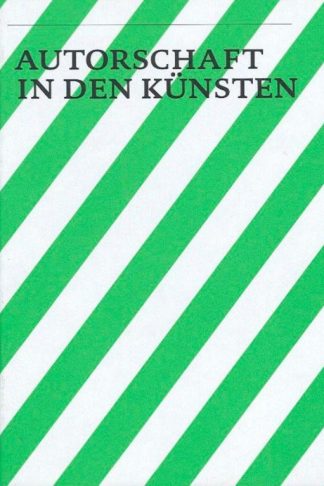
Autorschaft in den Künsten | Corina Caduff, Tan Wälchli (Hg.) Zürcher Jahrbuch der Künste
«Autorschaft» ist seit einigen Jahren ein viel diskutierter Begriff. Das Thema ist nach wie vor sehr aktuell, denn zweifellos ist das Verständnis von Autorschaft angesichts der fortschreitenden Digitalisierungsprozesse gegenwärtig heftig in Bewegung. Welche Auswirkungen haben diese Prozesse auf die Selbstwahrnehmung von Künstler*innen? Gilt der Topos vom «Tod des Autors» immer noch, und wie verlaufen die Kämpfe um Macht und Autorschaftsrechte heute? Diese Debatten werden hier erstmals im Rahmen sämtlicher Künste geführt. Künstler*innen und Wissenschaftler*innen – vom Konzertpianisten über die Designforscherin und den Filmemacher bis hin zur Architekturtheoretikerin – präsentieren analytische Reflexionen sowie Beispiele aus der aktuellen Praxis aus Architektur, Design, Film, Kunst, Literatur, Musik, Theater.