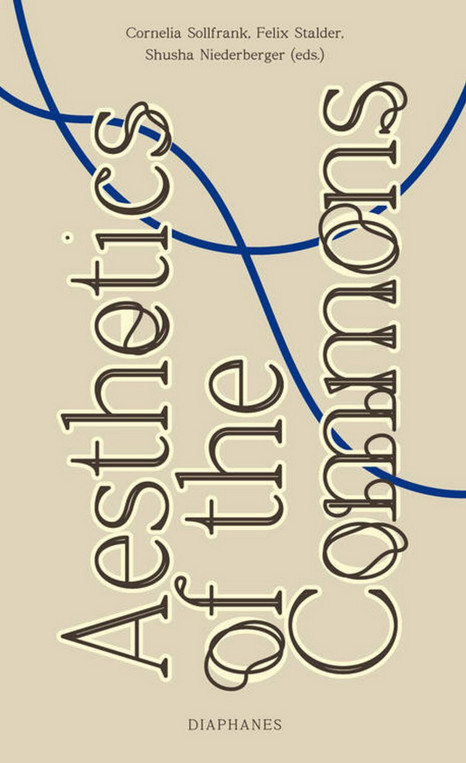
Aesthetics of the Commons | Cornelia Sollfrank, Felix Stalder, Shusha Niederberger (eds.)
CHF 30.00
What do a feminist server, an art space located in a public park in North London, a ‘pirate’ library of high cultural value yet dubious legal status, and an art school that emphasizes collectivity have in common? They all demonstrate that art can play an important role in imagining and producing a real quite different from what is currently hegemonic; that art has the possibility to not only envision or proclaim ideas in theory, but also to realize them materially.
Aesthetics of the Commons examines a series of artistic and cultural projects—drawn from what can loosely be called the (post)digital—that take up this challenge in different ways. What unites them, however, is that they all have a ‘double character.’ They are art in the sense that they place themselves in relation to (Western) cultural and art systems, developing discursive and aesthetic positions, but, at the same time, they are ‘operational’ in that they create recursive environments and freely available resources whose uses exceed these systems. The first aspect raises questions about the kind of aesthetics that are being embodied, the second creates a relation to the larger concept of the ‘commons.’ In Aesthetics of the Commons, the commons are understood not as a fixed set of principles that need to be adhered to in order to fit a definition, but instead as a ‘thinking tool’—in other words, the book’s interest lies in what can be made visible by applying the framework of the commons as a heuristic device.
Aesthetics of the Commons | Cornelia Sollfrank, Felix Stalder, Shusha Niederberger (eds.) [E-Book PDF]
What do a feminist server, an art space located in a public park in North London, a ‘pirate’ library of high cultural value yet dubious legal status, and an art school that emphasizes collectivity have in common? They all demonstrate that art can play an important role in imagining and producing a real quite different from what is currently hegemonic; that art has the possibility to not only envision or proclaim ideas in theory, but also to realize them materially.
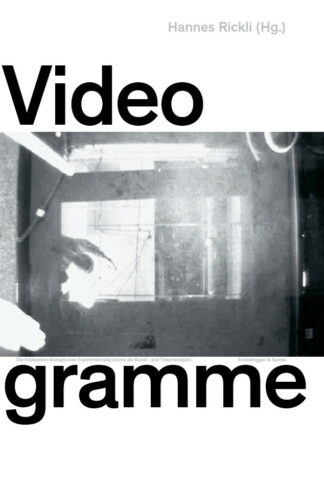
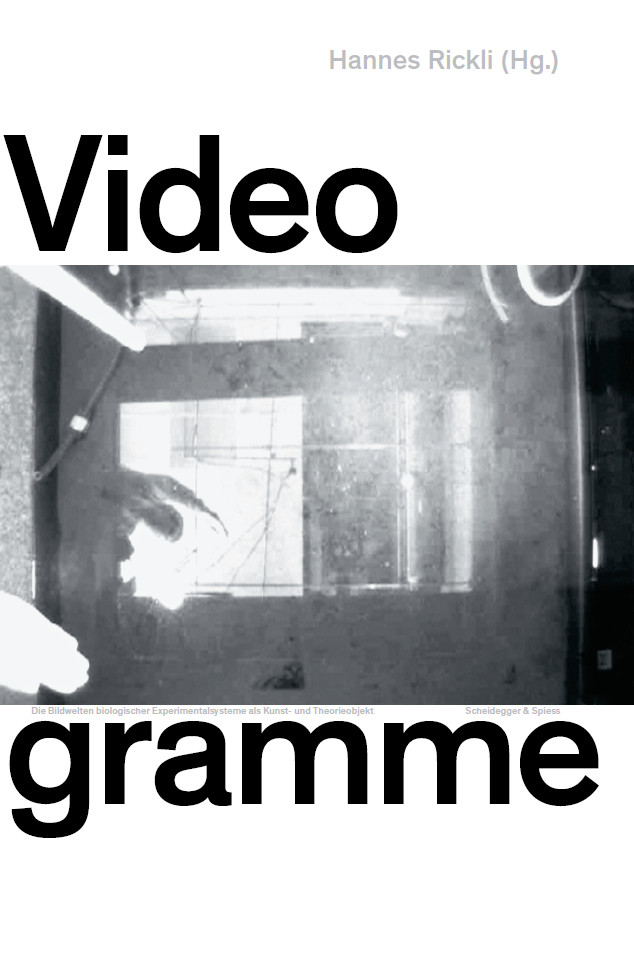
Die Bildwelten biologischer Experimentalsysteme als Kunst- und Theorieobjekt
Der Künstler Hannes Rickli befasst sich seit 20 Jahren mit audiovisuellen Aufzeichnungen aus dem Forschungskontext der Verhaltensbiologie. Die Videogramme eröffnen einen ungewöhnlichen Einblick in naturwissenschaftliche Versuchanordnungen. In diesem überschüssigen Beiwerk der wissenschaftlichen Daten, sozusagen im Schatten der Objektivität, wird erkennbar, dass die Herstellung wissenschaftlicher Tatsachen nicht einfach nach zuvor festgelegten Plänen erfolgt, sondern sich im physischen Widerstand zwischen menschlichen, technischen – und tierischen – Akteuren ereignet. Bei den Videogrammen handelt es sich um einen Typus instrumentaler Bewegtbilder, der von den Bildwissenschaften und der Bildtheorie bis anhin kaum beachtet worden ist. (dt./engl.)
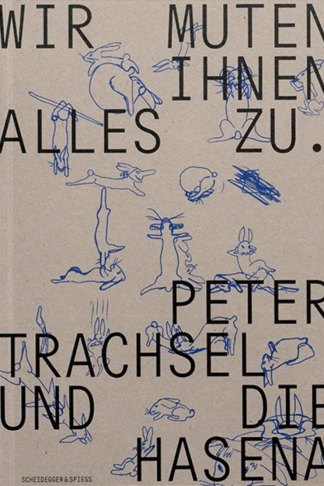
Wir muten Ihnen alles zu. Peter Trachsel und die Hasena | Michael Hiltbrunner (Hg.)
CHF 49.00
Peter Trachsel (1949–2013) war Mitte der 1970er-Jahre als Performancekünstler aktiv und am Ausbau der F+F Schule für experimentelle Gestaltung beteiligt. Mit seinem Verein Hasena – Institut für (den) fliessenden Kunstverkehr realisierte er unterschiedliche Ausstellungs- und Auftrittsformate. Diese Monografie arbeitet zum ersten Mal das Schaffen des aussergewöhnlichen Künstlers auf und leistet einen wichtigen Beitrag zur Dokumentation der Schweizer Performancekunst. Die Essays setzen sich mit Trachsels Medienvielfalt und seinem Interesse für partizipative Projektmodelle auseinander. Ergänzt werden sie durch Fotografien seiner Performances sowie Briefe und Zeichnungen von Kolleginnen und Kollegen, die einen Einblick in die Arbeits- und Denkweise von Trachsel und seinem Umfeld geben.
282 Seiten, Scheidegger & Spiess, 2018
ISBN 978-3-85881-609-2
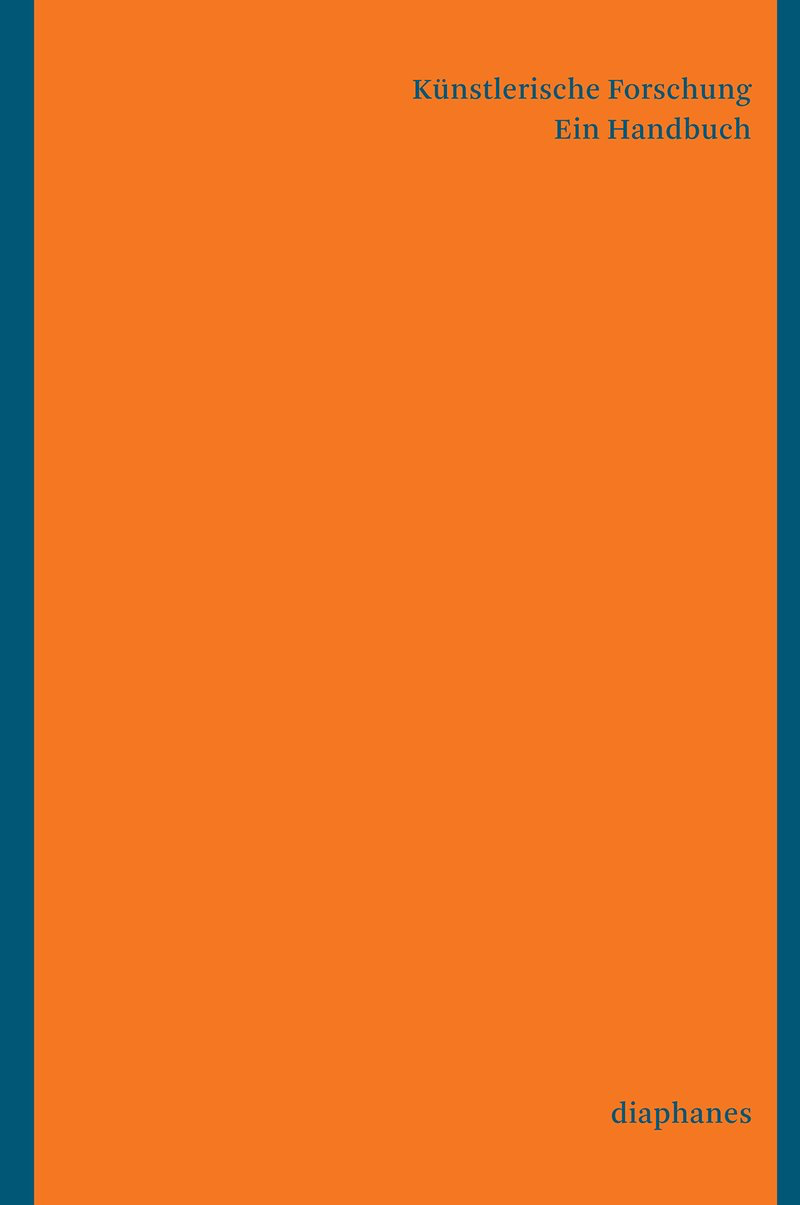
Künstlerische Forschung. Ein Handbuch | Jens Badura, Selma Dubach et al. (Hg.)
CHF 45.00
Die Debatte um »Künstlerische Forschung« hat einen hohen Grad an Differenzierung erreicht, sei es in ihrer allgemeinen, theorieorientierten Dimension, sei es auf der Ebene der Praxis des künstlerischen Forschens selbst. Alles deutet darauf hin, dass sich die Künstlerische Forschung an der Schwelle zu einer Institutionalisierung befindet. Ziel des Bandes ist es nicht nur, eine Bestandsaufnahme der unterschiedlichen Frage- und Themenstellungen zu erstellen, sondern auch jene Kontroversen abzubilden, aufgrund derer man den Prozess einer vorschnellen »Disziplinierung« der künstlerischen Forschung kritisch betrachten mag. Entlang einiger Leitfragen entwirft der Band eine Topographie des gesamten Feldes der Debatte um künstlerische Forschung.
344 Seiten, Diaphanes, 2015
ISBN 978-3-03734-880-2
![Aesthetics of the Commons | Cornelia Sollfrank, Felix Stalder, Shusha Niederberger (eds.) [E-Book PDF]](https://publikationen.zhdk.ch/wp-content/uploads/2021/06/Aethetics-of-the-commons-324x486.jpg)