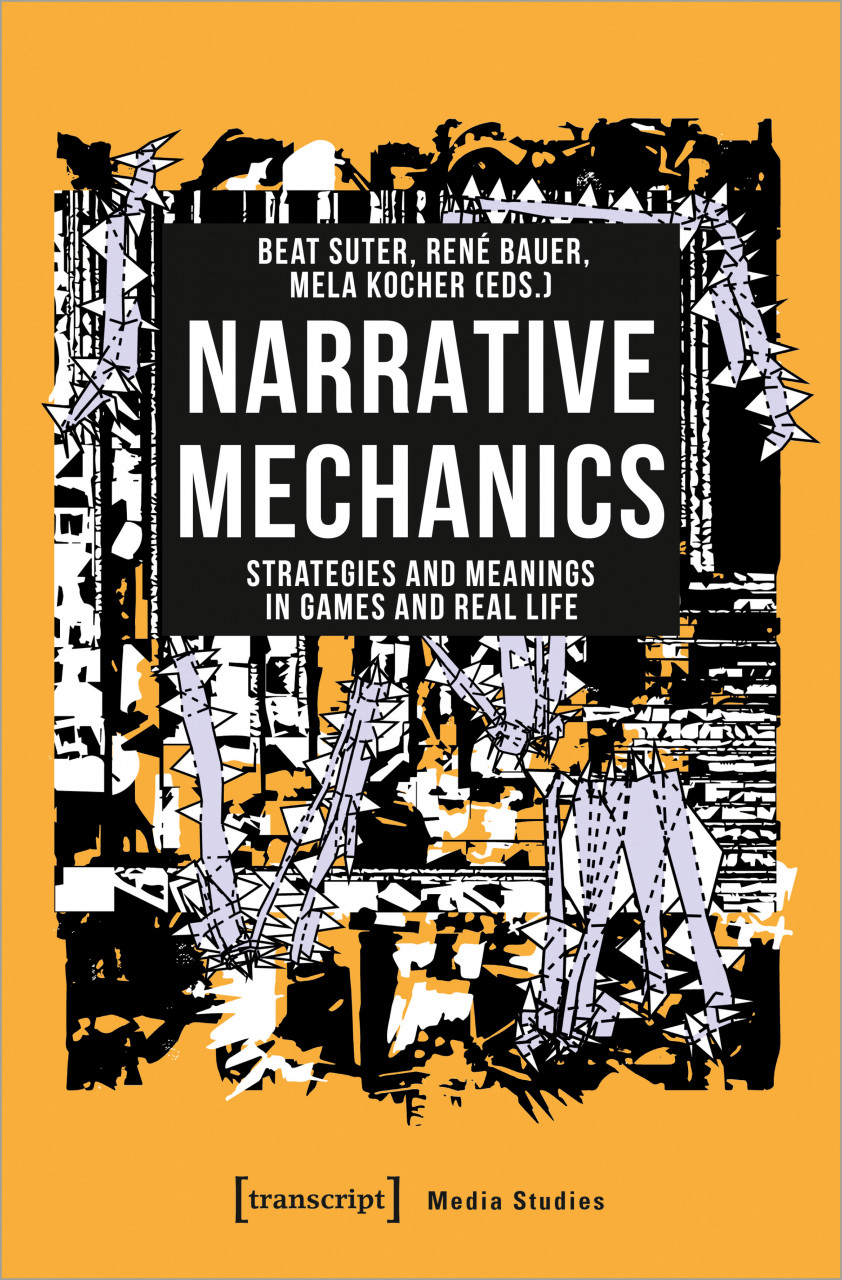
Narrative Mechanics. Strategies and Meanings in Games and Real Life | Beat Suter, René Bauer, Mela Kocher (eds.)
CHF 51.50
What do stories in games have in common with political narratives?
This book identifies narrative strategies as mechanisms for meaning and manipulation in games and real life. It shows that the narrative mechanics so clearly identifiable in games are increasingly used (and abused) in politics and social life. They have »many faces«, displays and interfaces. They occur as texts, recipes, stories, dramas in three acts, movies, videos, tweets, journeys of heroes, but also as rewarding stories in games and as narratives in society – such as a career from rags to riches, the concept of modernity or market economy. Below their surface, however, narrative mechanics are a particular type of motivational design – of game mechanics.
Was haben Geschichten in Spielen mit politischen Erzählungen gemeinsam?
17 Autor:innen widmen sich dieser Frage und veranschaulichen, wie die in Spielen so klar identifizierbaren narrativen Mechanismen zunehmend in der Politik und im gesellschaftlichen Leben eingesetzt (und missbraucht) werden. Die Publikation versammelt Beiträge der jährlich stattfindenden Konferenz gameZ & ruleZ sowie von weiteren Autor:innen aus der Fachrichtung Game Design.
Narrative Mechanics. Strategies and Meanings in Games and Real Life | Beat Suter, René Bauer, Mela Kocher (eds.) [E-Book PDF]
What do stories in games have in common with political narratives?
This book identifies narrative strategies as mechanisms for meaning and manipulation in games and real life. It shows that the narrative mechanics so clearly identifiable in games are increasingly used (and abused) in politics and social life. They have »many faces«, displays and interfaces. They occur as texts, recipes, stories, dramas in three acts, movies, videos, tweets, journeys of heroes, but also as rewarding stories in games and as narratives in society – such as a career from rags to riches, the concept of modernity or market economy. Below their surface, however, narrative mechanics are a particular type of motivational design – of game mechanics.
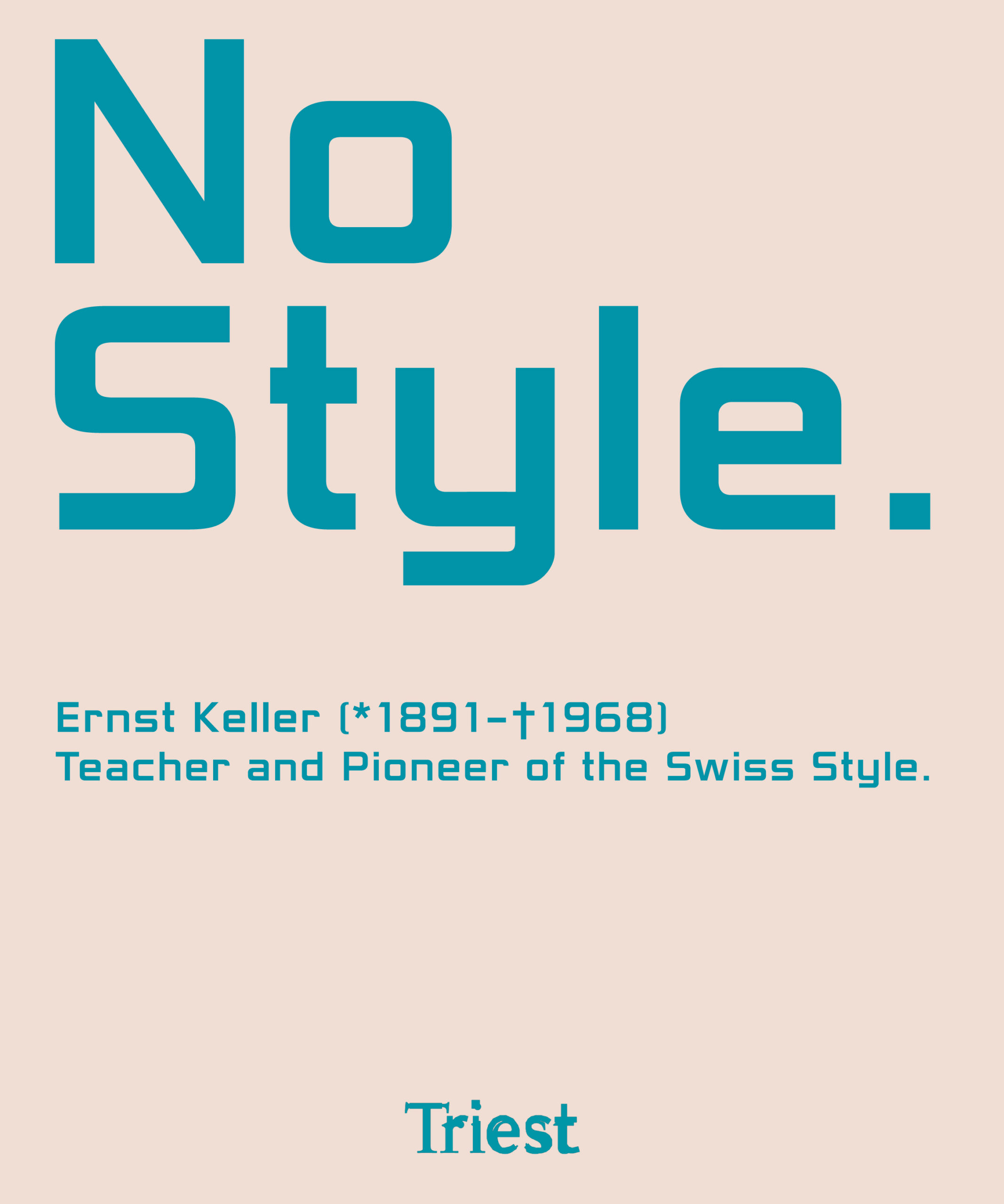
No style | Peter Vetter, Katharina Leuenberger, Meike Eckstein
CHF 55.00
Ernst Keller (1891-1968). Teacher and pioneer of the Swiss Style
In various different places, particularly in the USA, when writing the history of graphic design, Ernst Keller is referred to as the father of Swiss Style, later International Typographic Style. This is down to the large number of Keller students, who later shaped this Swiss Style and made it famous. Keller’s achievement is shown purely using his oeuvre, primarily his poster designs and his work on lettering and graphic design in architecture.
Ernst Keller’s contribution to the development of innovative, non-academic didactic principles in design training plays a fundamental role. His teaching activity starting in 1918 can be defined as one of the first systematic training programmes for graphic design in the world.
253 pages, Triest Verlag, 2017
ISBN 978-3-0-3863023-4
Architectonics of Game Spaces | Andri Gerber, Ulrich Götz (eds.) [E-Book PDF]
What consequences does the design of the virtual yield for architecture and to what extent can the nature of architecture be used productively to turn game-worlds into sustainable places – over here, in «reality»?
This pioneering collection gives an overview of contemporary developments in designing video games and of the relationships such practices have established with the design of architecture. Due to their often simulatory nature, games reveal constructions of reality while positively impacting spatial ability and allowing for alternative avenues to complex topics and processes of negotiation. Granting insight into the merging of the design of real and virtual environments, this volume offers an invaluable platform for further debate.
343 pages, transcript, 2019
ISBN 978-3-8394-4802-1
Design Struggles critically assesses the ways in which the design field is involved in creating, perpetuating, promoting and reinforcing injustice and inequality in social, political, economic, cultural and ecological systems. This book shows how this entanglement arose from Eurocentric and neoliberal thinking. The voices and practices represented here propose to question and disrupt the discipline of design from within, by problematizing the very notions of design. They aim to do so by generating new, anti-racist, post-capitalist, queer-feminist, environmentally conscious and community-based ideas on how to transform design. In this way, Design Strugglesstrives to forge sustainable, new practices within the design field that challenge the status quo and amplify underrepresented voices, both in the world of design, as well as beyond.

![Narrative Mechanics. Strategies and Meanings in Games and Real Life | Beat Suter, René Bauer, Mela Kocher (eds.) [E-Book PDF]](https://publikationen.zhdk.ch/wp-content/uploads/2022/03/Narrative-Mechanics-324x486.jpg)
![Architectonics of Game Spaces | Andri Gerber, Ulrich Götz (eds.) [E-Book PDF]](https://publikationen.zhdk.ch/wp-content/uploads/2019/12/Architectonics-scaled-1-324x486.jpg)