
Beschreibung
ZHdK: Institut für Theorie (ITH)
![Ausstellen | Kathrin Busch, Burkhard Meltzer, Tido von Oppeln (Hg.) [E-Book PDF]](https://publikationen.zhdk.ch/wp-content/uploads/2019/05/image-1.jpg)
Zur Kritik der Wirksamkeit in den Künsten
In den heutigen Praxistheorien spielen Dinge und ihre Materialität eine prominente Rolle. Dinge gelten als ausgesprochen wirkmächtig, insofern sie als Handlungsmedien und Wissensträger fungieren. In diesen Diskussionen über die materielle Bedingung von kulturellen Praktiken ist die ästhetische Dimension der Dinge zunehmend in den Hintergrund geraten. Als Mitakteure in Handlungsverbünden scheinen Dinge ganz in ihrer praktischen Bedeutung aufzugehen. Was dabei vernachlässigt wird, ist zum einen, dass ihre Wirksamkeit nicht abzulösen ist von ihrer ästhetischen und affektiven Kraft, und zum anderen, dass Stillstellung und Passivierung von großer Bedeutung für jegliche Formen von Praxis und ihrer Spielräume sind. Diesen Momenten der Abweichung und Potentialität wird in den Künsten mit Verfahren der Neutralisierung von Praxis – wie Ausstellen, Vorführen, Proben oder Modellieren – Raum gegeben.
Reihe Denkt Kunst
368 Seiten (PDF), Diaphanes, 2016
ISBN 978-3-03734-566-5
ZHdK: Institut für Theorie (ITH)

Zur Kritik der Wirksamkeit in den Künsten
In den heutigen Praxistheorien spielen Dinge und ihre Materialität eine prominente Rolle. Dinge gelten als ausgesprochen wirkmächtig, insofern sie als Handlungsmedien und Wissensträger fungieren. In diesen Diskussionen über die materielle Bedingung von kulturellen Praktiken ist die ästhetische Dimension der Dinge zunehmend in den Hintergrund geraten. Als Mitakteure in Handlungsverbünden scheinen Dinge ganz in ihrer praktischen Bedeutung aufzugehen. Was dabei vernachlässigt wird, ist zum einen, dass ihre Wirksamkeit nicht abzulösen ist von ihrer ästhetischen und affektiven Kraft, und zum anderen, dass Stillstellung und Passivierung von großer Bedeutung für jegliche Formen von Praxis und ihrer Spielräume sind. Diesen Momenten der Abweichung und Potentialität wird in den Künsten mit Verfahren der Neutralisierung von Praxis – wie Ausstellen, Vorführen, Proben oder Modellieren – Raum gegeben.
Reihe Denkt Kunst
368 Seiten, Diaphanes, 2016
ISB 978-3-03734-566-5
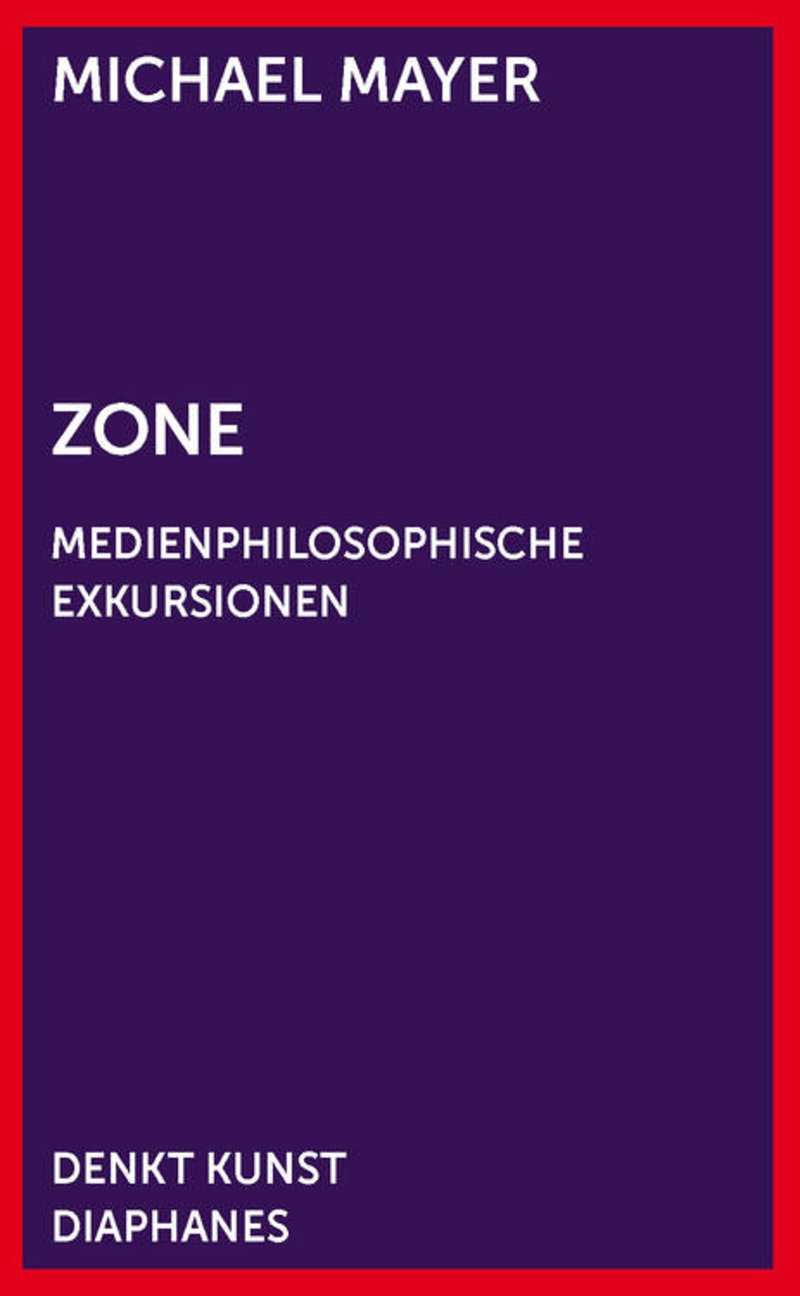
Logik, Funktion und Praxis der Grenze gehören zum festen Inventar abendländischen Denkens. Grenzen zu setzen gilt als Ausdruck disziplinierender Fürsorge, sie zu übertreten als Provokation, ihre Sicherung als primärer Akt staatlicher Souveränität. Stets geht es um eine Demarkation, die den Unterschied macht und das Unterschiedene. Inspiriert vom Bild der Zone, das Andrej Tarkowskij in seinem Film »Stalker« entwirft, erprobt der Band eine andere Geste: Wir überschreiten keine Grenzen mehr, wir betreten Zonen – jenen »Raum«, der stets »dazwischen« liegt, jenes Dritte als Mitte und Mittleres, als Medium.
Reihe Denkt Kunst
184 Seiten, Diaphanes, 2018
ISBN 978-3-0-3734643-3


Sergej Eisensteins Bildtheorie und Filmpraxis sind aufs Engste miteinander verbunden. Aus beidem entwickelte er ein Theoriewerk: ein immer wieder neu montiertes work in progress, dessen epistemische Obsession im physiologischen Denkpotential des Kinos selbst gründete. Auf der Suche nach den Ursprüngen eines solchen »sinnlichen Denkens« des Kinos legte Eisenstein die Kulturgeschichte neu aus. 1929 plante der Regisseur ein »Buch in Form einer Kugel«.
Reihe Denkt Kunst
464 Seiten, Diaphanes, 2018
ISBN 978-3-0-3580076-0
Die Debatte um »Künstlerische Forschung« hat einen hohen Grad an Differenzierung erreicht, sei es in ihrer allgemeinen, theorieorientierten Dimension, sei es auf der Ebene der Praxis des künstlerischen Forschens selbst. Alles deutet darauf hin, dass sich die Künstlerische Forschung an der Schwelle zu einer Institutionalisierung befindet. Ziel des Bandes ist es nicht nur, eine Bestandsaufnahme der unterschiedlichen Frage- und Themenstellungen zu erstellen, sondern auch jene Kontroversen abzubilden, aufgrund derer man den Prozess einer vorschnellen »Disziplinierung« der künstlerischen Forschung kritisch betrachten mag. Entlang einiger Leitfragen entwirft der Band eine Topographie des gesamten Feldes der Debatte um künstlerische Forschung.
344 Seiten, Diaphanes, 2015
ISBN 978-3-03734-880-2