Breathtaking Greenhouse Parastructures | Luis Berríos-Negrón [E-Book PDF]
A supplement to the Arcades Project from a Caribbean Perspective [and a call for a careful practice of epistemológica].
Doctoral Thesis in Art Technology Design
Breathtaking Greenhouse Parastructures is a doctoral work that supplements the unfinished modern opus The Arcades Project [Das Passagen-Werk]. The supplement takes the form of a sculptural, historical, and technological deposition of ‚greenhouse‘ that presently oscillates between a past-background and future-foreground to Walter Benjamin’s ‚theatrical‘ handling of the Parisian arcades.
Berríos-Negrón’s Caribbean perspective projects an oscillating treatment of ‚greenhouse‘ as a prop from which to activate the following question: is colonial memory the drive of Global Warming? That core question has led to retrospectively hypothesise that the technology of ‚greenhouse‘ is—beyond metaphor—the illusory (dis)embodiment of the toxic binaries of interior & exterior that are still shaping Western technological frameworks, no less the natural sciences (and their histories). Because of that illusory, spectral, if paranormal power, ‚greenhouse‘ becomes at once the Western colonial enframing to both the messianic promise for conserving biological history, as well as the messianic remedy to suppress the traumata that are destining Global Warming. That potent (dis)embodied character leads Berríos-Negrón to set ‚greenhouse‘ as primary site to the geological timeline of the Anthropocene, as well as research specimen for a careful, life-affirming study and practice of object-relations and display he calls epistemológica.
Luis Berríos-Negrón is the first doctoral student to complete his PhD on the KTD programme, a collaborative transdisciplinary PhD programme established in 2015 between Konstfack and The Royal Institute of Technology, KTH.
This doctoral work has been made possible by the Konst Teknik Design / Art Technology Design doctoral programme between the Royal Institute of Technology (KTH) and Konstfack University of Arts, Crafts and Design of Sweden. The publication has also been funded by the Research Focus in Transdisciplinarity Programme of the Zürcher Hochschule der Künste (ZHdK).
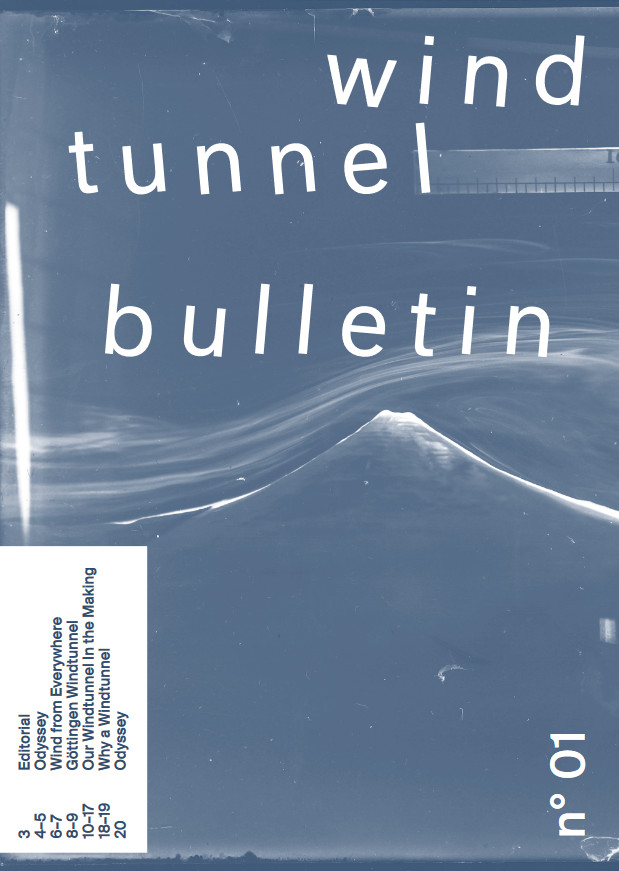
Das Wind Tunnel Bulletin wird vom Forschungsschwerpunkt Transdiziplinarität produziert und herausgegeben, um Materialien aus der eigenen Forschung zu teilen, die wir für interessant halten. Dabei geht es darum, die Materialien nur so weit zu verdichten, dass sie disziplinär uneindeutig bleiben. Wir nennen das «proto-disziplinär» oder auch «not-yet art», weil wir davon ausgehen, dass Forschungsergebnisse für alle verfügbar sein sollen und dass das im Falle der Kunst bedeuten kann, dass andere Künstler*innen mit unseren Materialien neue Werke schaffen.
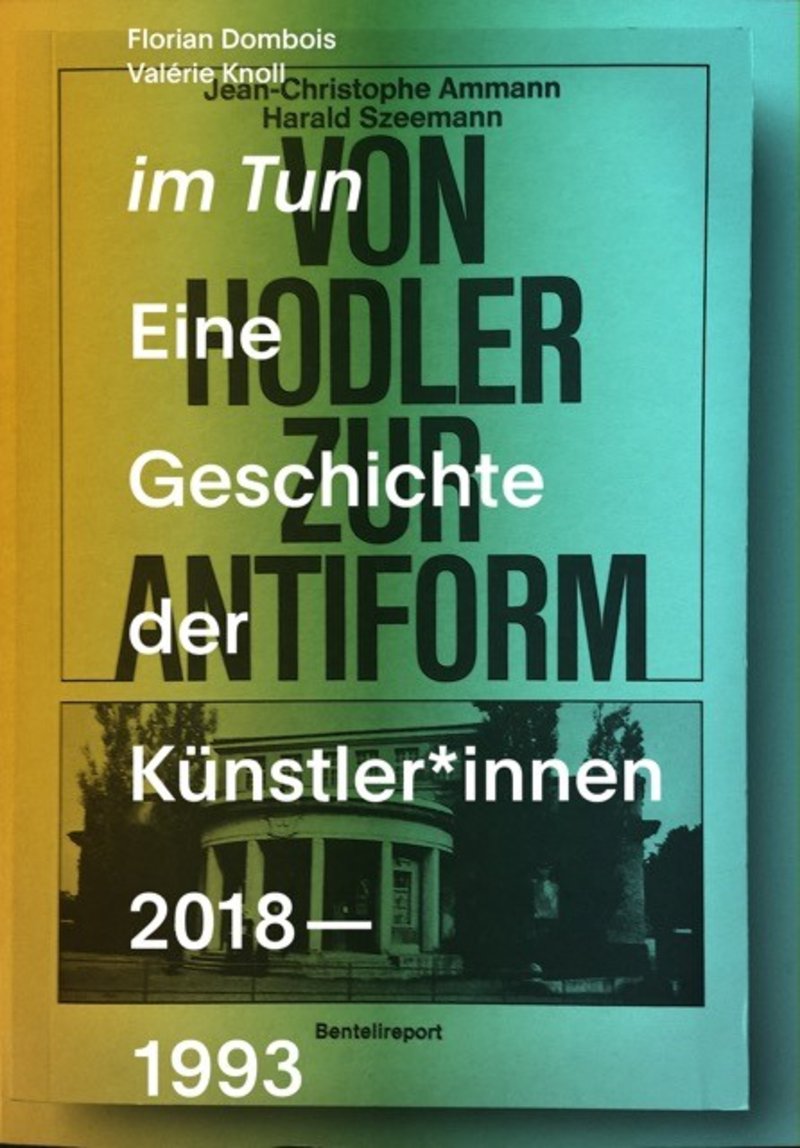
Im Tun. Eine Geschichte der Künstler*innen 2018-1993 | Florian Dombois, Valérie Knoll (Hg.)
CHF 39.00
Die Kunsthalle Bern, die «Mutter aller Kunsthallen», wurde 1918 von Berner Künstler*innen gegründet. Hundert Jahre später nehmen wiederum 25 Künstler*innen mit Bern-Bezug die Arbeit der Kunsthalle der letzten 25 Jahre in den Blick. Es entsteht vor unseren Augen ein Geschichtspanorama, in dem die Künstler*innen eine historische Bewertung vornehmen und uns die Geschichte der Kunstproduktion aus der Perspektive der Produzierenden.
416 Seiten, Scheidegger & Spiess, 2018
ISBN 978-3-85881-594-1
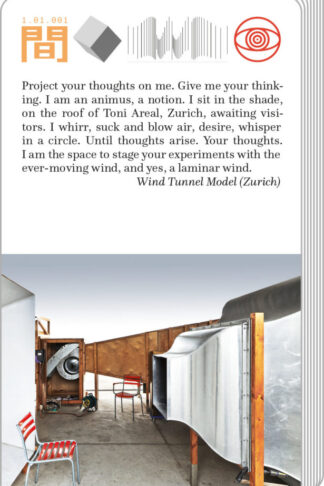
Die Spekulationen über die Mehrdeutigkeit von Kunstwerken und deren Potenzial, sich in verschiedene Bedeutungshorizonte einzuweben, sind vielfältig und zahlreich. Das «Wind Tunnel Deck»-Kartenspiel nimmt diese Beobachtung ernst. Es gibt den Konzepten, Kräften, Akteur:innen, Artefakten und Happenings, die seit 2012 rund um den Wind Tunnel von Florian Dombois und seiner Forschungsgruppe an der ZHdK operieren, eine Stimme und fokussiert ihre noch offenen Potenziale.
56 Karten, art&fiction, 2022
ISBN 978-2-88964-042-3

![Breathtaking Greenhouse Parastructures | Luis Berríos-Negrón [E-Book PDF]](https://publikationen.zhdk.ch/wp-content/uploads/2021/05/Breathtaking-Greenhouse-Parastructures.jpg)

![Breathtaking Greenhouse Parastructures | Luis Berríos-Negrón [E-Book PDF]](https://publikationen.zhdk.ch/wp-content/uploads/2021/05/Breathtaking-Greenhouse-Parastructures-295x486.jpg)