75 Jahre Schauspielschule Zürich | Hartmut Wickert, Anton Rey (Hg.)
Vom Bühnenstudio zur Zürcher Hochschule der Künste. Geschichte und Gegenwart der Schauspielausbildung in Zürich 1937 bis 2012. Hrsg. Departement Darstellende Künste und Film, Zürcher Hochschule der Künste
Mit einem Fotoessay von Lukas Wassmann und mit Beiträgen von Ute Kröger, Ralph Müller, Bruno Ganz, Peter Bissegger, Gardi Hutter, Hanspeter Müller-Drossaart, Peter Danzeisen, Hartmut Wickert und vielen anderen.
Die Geschichte von der Gründung des Bühnenstudios bis zur Entstehung des Departements Darstellende Kunst und Film der ZHdK ist nicht nur die Geschichte von 75 Jahre Schauspielausbildung in Zürich, sondern zugleich ein wichtiges Stück Zürcher Stadtgeschichte. Die Publikation bietet eine historische, mit vielfältigem Bild- und Informationsmaterial versehene Dokumentation über die verschiedenen Stationen und die prägenden Personen dieser Geschichte. Dabei kommen zahlreiche Zeitzeugen aus den unterschiedlichen Phasen der Entwicklung der Schauspielausbildung zu Wort und ein Bildessay bietet Einblicke in den heutigen, Theater, Tanz und Film umfassenden Ausbildungsalltag am Departement.
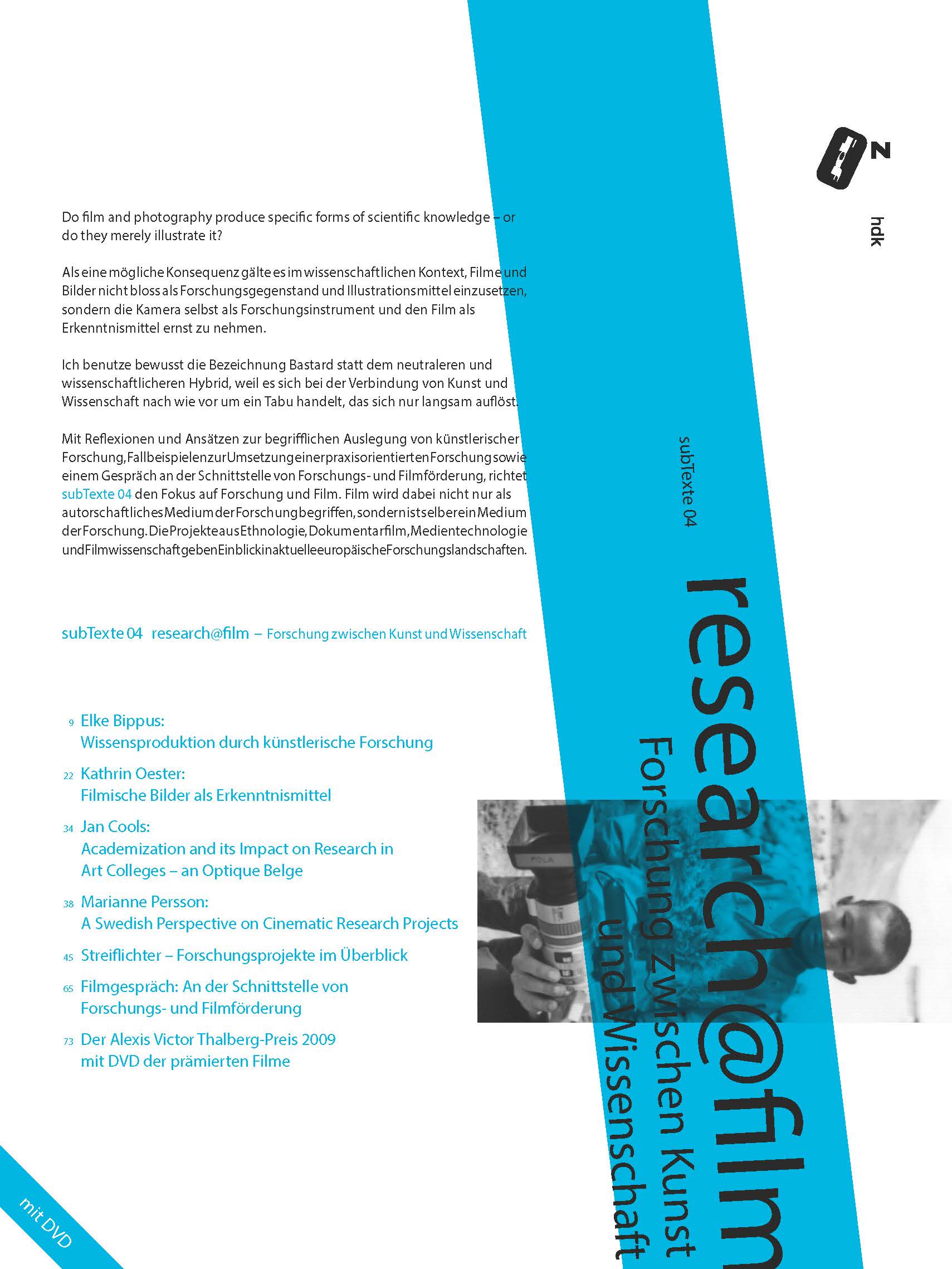
Mit Reflexionen und Ansätzen zur begrifflichen Auslegung von künstlerischer Forschung, Fallbeispielen zur Umsetzung einer praxisorientierten Forschung sowie einem Gespräch an der Schnittstelle von Forschungs- und Filmförderung, richtet subTexte 04 den Fokus auf Forschung und Film. Film wird dabei nicht nur als autorschaftliches Medium der Forschung begriffen, sondern ist selber ein Medium der Forschung.
Ästhetische Kommunikation und Kindertheater | Mira Sack, Anton Rey (Hg.) [E-Book PDF]
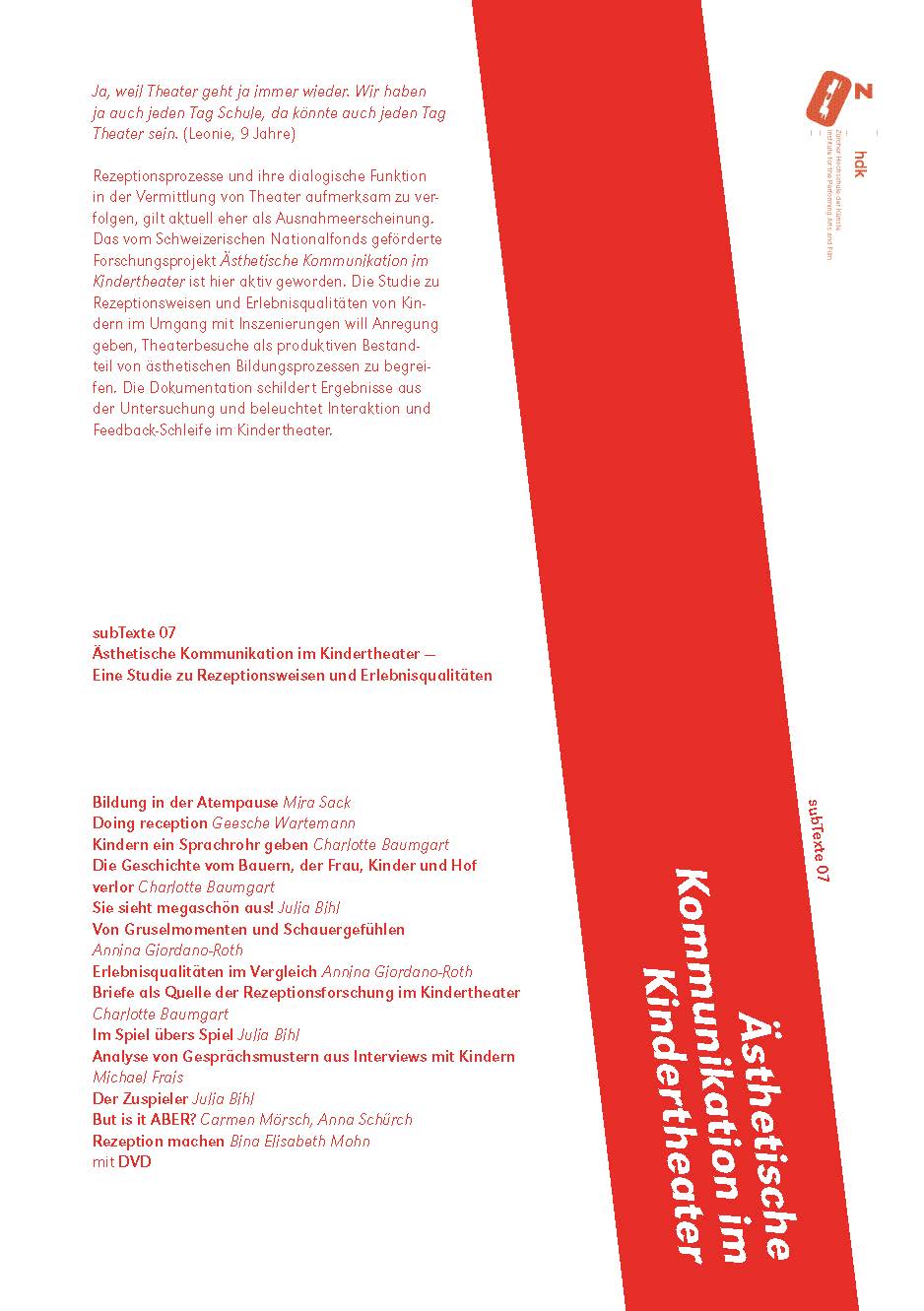
Rezeptionsprozesse und ihre dialogische Funktion in der Vermittlung von Theater aufmerksam zu verfolgen, gilt aktuell eher als Ausnahmeerscheinung. Das vom Schweizerischen Nationalfonds geförderte Forschungsprojekt «Ästhetische Kommunikation im Kindertheater» ist hier aktiv geworden. Die Studie zu Rezeptionsweisen und Erlebnisqualitäten von Kindern im Umgang mit Inszenierungen will Anregung geben, Theaterbesuche als produktiven Bestandteil von ästhetischen Bildungsprozessen zu begreifen. Die Dokumentation schildert Ergebnisse aus der Untersuchung und beleuchtet Interaktion und Feedback-Schleife im Kindertheater.
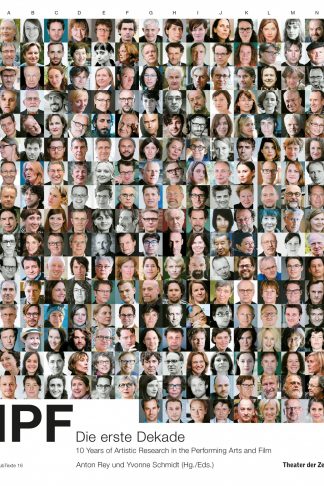
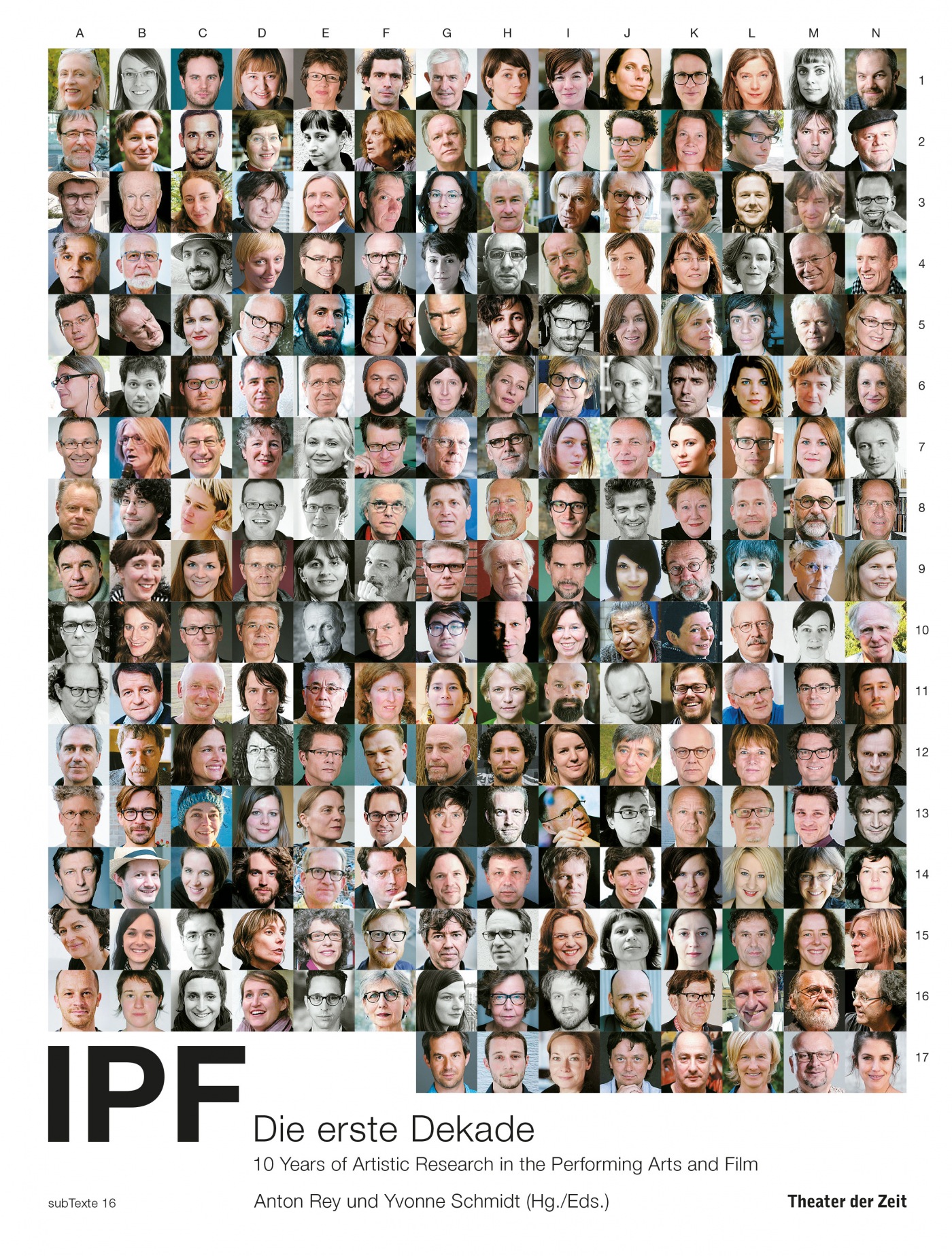
IPF – Die erste Dekade | Anton Rey, Yvonne Schmidt (Hg.)
10 Years of Artistic Research in the Performing Arts and Film
Das Institute for the Performing Arts and Film der Zürcher Hochschule der Künste mit seinen Forschungsschwerpunkten „Performative Praxis“ und „Film“ nimmt im Kontext der Debatte um Forschung an den Kunsthochschulen eine Vorreiterrolle ein. Seit einem Jahrzehnt generiert, initiiert und betreut das IPF Forschungsprojekte, Veranstaltungs- und Publikationsformate, die einen Dialog zwischen wissenschaftlichen und künstlerischen Verfahren herstellen. Die Themenfelder gliedern sich in Forschung über Kunst, Forschung durch Kunst und Forschung mit Kunst. Dieses Buch bietet eine Bestandsaufnahme aller bisherigen Aktivitäten des Instituts. (dt./engl.)
![research@film | Lucie Bader Egloff, Gabriela Christen, Stefan Schöbi (Hg.) [E-Book PDF]](https://publikationen.zhdk.ch/wp-content/uploads/2020/03/subTexte_04_Research_at_Film-324x486.jpg)
![Ästhetische Kommunikation und Kindertheater | Mira Sack, Anton Rey (Hg.) [E-Book PDF]](https://publikationen.zhdk.ch/wp-content/uploads/2020/03/subTexte_07_Aesthetische_Kommunikaiton_im_Kindertheater-324x486.jpg)