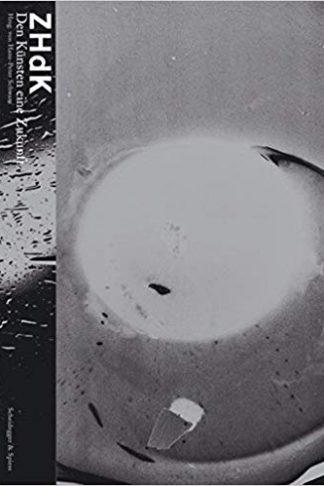
ZHdK – A Future for the Arts | Hans-Peter Schwarz (ed.)
CHF 118.00
What do actors Bruno Ganz and Johanna Bantzer have in common with photographers Olaf Breuning and Ernst Scheidegger, or film directors Fredi M. Murer and Andrea Staka with dancer Kusha Alexi? Along with designers Adrian Frutiger and Max Bill, musicians Anne-Sophie Mutter and Yuka Tsuboi, artists Augusto Giacometti and Sophie Taeuber-Arp, and actors Gustav Knuth and Laura de Weck, they all studied at Zürich’s legendary art schools.
In August 2007, these institutions, which were previously separated by discipline, merged to form one of Europe’s most multifaceted and significant art education centers, the Zurich University of the Arts (ZHdK). Published to mark its founding, ZHdK—A Future for the Arts recounts the history of the previous schools, examines the importance of their well-known alumni, and sets forth ambitious goals for the future of the institution. With over seven hundred color illustrations and accompanied by a companion CD and DVD, this volume traces the history of Swiss art education and features perspectives that span the entire curriculum. ZHdK—A Future for the Arts is not just a portrait of a single university, but a rendering of Swiss cultural history of the past fifty years.
352 pages, CD, DVD, Scheidegger & Spiess, 2007
ISBN 978-3-85881-709-9
Essays by Nicole Biermaier and Janine Schiller, Corina Caduff, Michael Eidenbenz, Urs Fanger, Daniel Fueter, Andrea Gleiniger, Bernhard Lehner, Oliver Matz, Matthias Michel, Jacqueline Otten, Giaco Schiesser, Hans-Peter Schwarz, Christoph Weckerle, Hartmut Wickert, and Martin Woodtli.
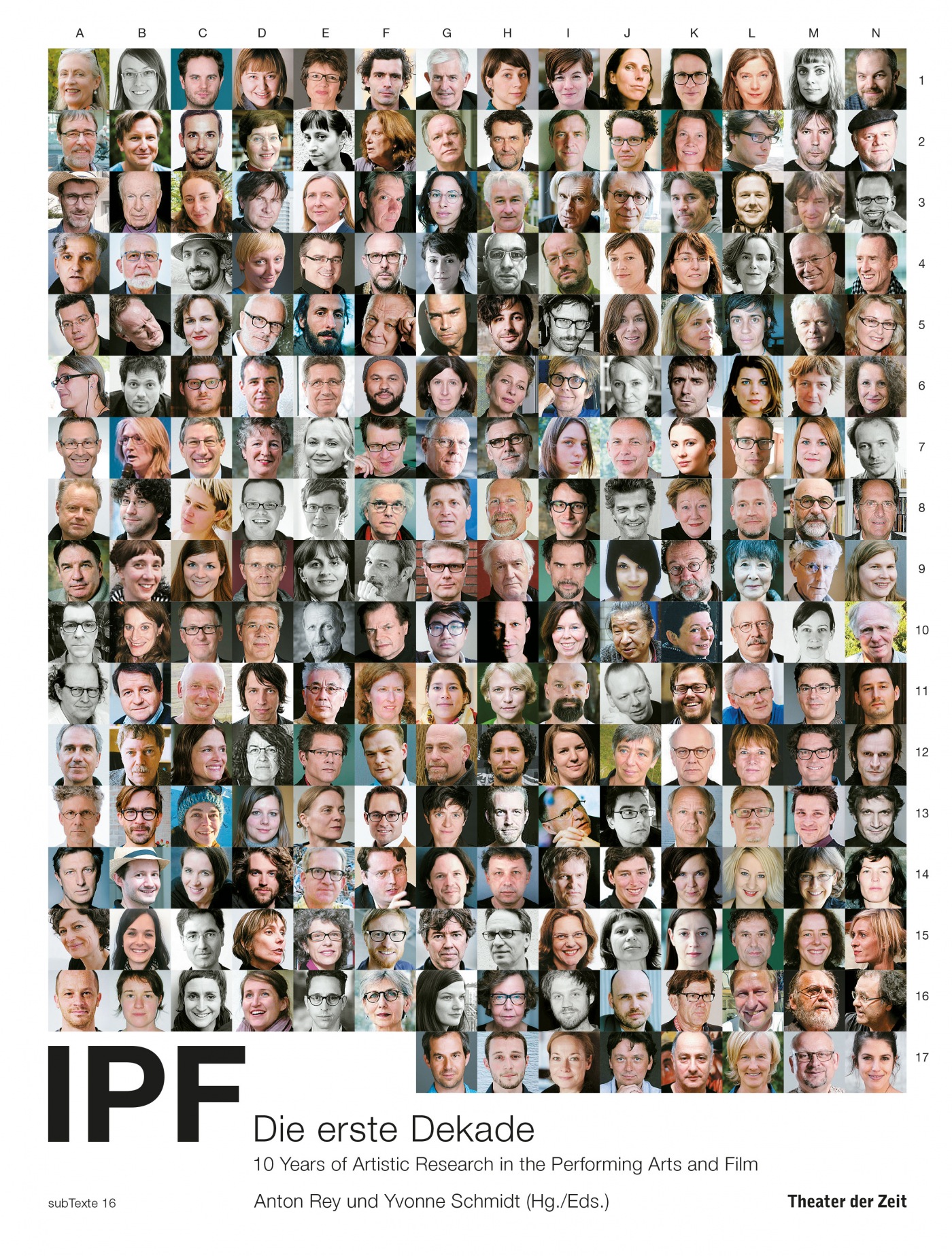
IPF – Die erste Dekade | Anton Rey, Yvonne Schmidt (Hg.) [E-Book PDF]
10 Years of Artistic Research in the Performing Arts and Film
Das Institute for the Performing Arts and Film der Zürcher Hochschule der Künste mit seinen Forschungsschwerpunkten „Performative Praxis“ und „Film“ nimmt im Kontext der Debatte um Forschung an den Kunsthochschulen eine Vorreiterrolle ein. Seit einem Jahrzehnt generiert, initiiert und betreut das IPF Forschungsprojekte, Veranstaltungs- und Publikationsformate, die einen Dialog zwischen wissenschaftlichen und künstlerischen Verfahren herstellen. Die Themenfelder gliedern sich in Forschung über Kunst, Forschung durch Kunst und Forschung mit Kunst. Dieses Buch bietet eine Bestandsaufnahme aller bisherigen Aktivitäten des Instituts. (dt./engl.)
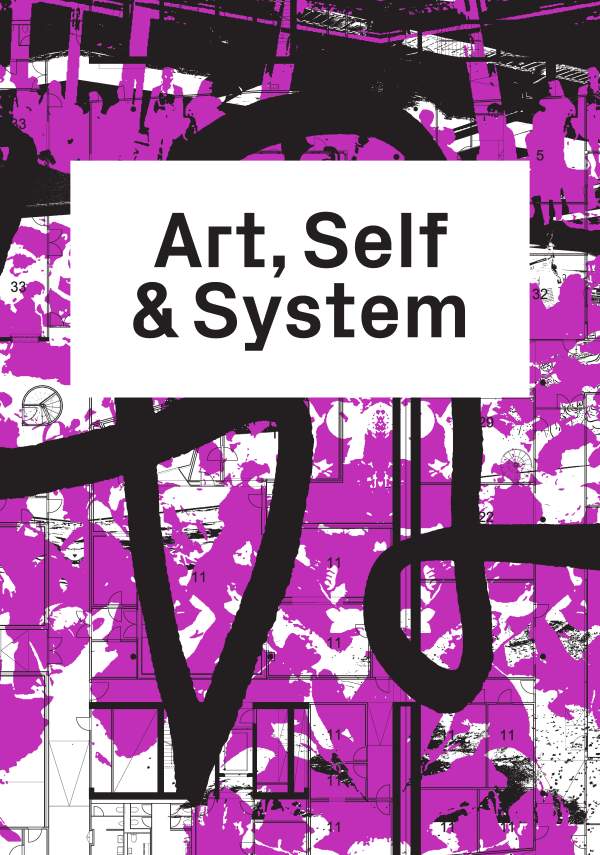
The artist as entrepreneur has become a common topic of discussion. Here, however, we put forward the notions of “self” and “system.” First, every artistic practice is self-reflexive and self-contextualizing. Second, each system an artist builds allows for innovation. Let’s construct a space where we inevitably find ourselves together with others, even if we feel lonely, like a witch lost in a library of artists’ books. Let’s invent our right to do so. Let’s enter the world of smell and write about a megalomaniac art school while documenting a generation of art students and their studios with analogue photography. How does anyone even manage—from making objects to performing one’s own existence? Device, organon, animal.
328 pages, Sternberg Press, 2019
ISBN 978-3-956794-88-9

![IPF - Die erste Dekade | Anton Rey, Yvonne Schmidt (Hg.) [E-Book PDF]](https://publikationen.zhdk.ch/wp-content/uploads/2019/04/9783957491244-324x486.jpg)